

Marketing No Comments

UK economy, gearing up for recovery, grows more than expected

UK economy grew more strongly than expected in March as it gathered speed for a bounce-back from its coronavirus slump of 2020, official data showed on Wednesday.

The 2.1% growth from February was led by the reopening of schools which, alongside COVID-19 testing and vaccinations, pushed up activity in the public sector and by retailers as consumers spent some of their lockdown savings.

There was also a burst of work in the construction sector ahead of the expiry of a tax break for home-buyers.

Analysts polled by Reuters had expected monthly growth of 1.3% for world’s fifth-biggest economy.

“Businesses and the government alike will feel this data marks a turning point,” Ana Boata, head of macroeconomic research at trade credit insurer Euler Hermes, said.

“With the ongoing easing of restrictions, confirmed this week by the prime minister, there’s hope that this could be the start of a long hot summer for British businesses.”

Over the first three months of 2021, when the country was under a third lockdown, gross domestic product shrank by 1.5%, the Office for National Statistics said.

Although a less severe hit than initially feared, Samuel Tombs, an economist with Pantheon Macroeconomics, said it meant Britain almost certainly remained the laggard among the Group of Seven rich countries for the fourth quarter in a row.

However, British GDP looked on course grow by 5% in the April-to-June period “which should mean that the UK finally hands over the wooden spoon to another G7 economy.”

To find out more about how we can assist you with your Second Charge Mortgage please click here

The BoE said last week it expected the UK economy would recover quickly as the country speeds ahead with Europe’s fastest vaccination programme and coronavirus restrictions are lifted.

Its forecast for 7.25% growth in 2021 would be the fastest since a Second World War rush to rearm although by comparison GDP collapsed by 9.8% in 2020, its deepest slump in over three centuries.

“Despite a difficult start to this year, economic growth in March is a promising sign of things to come,” finance minister Rishi Sunak said.

“As we cautiously reopen the economy, I will continue to take all the steps necessary to support our recovery.”

Britain’s economy remained 8.7% smaller than at the end of 2019. The BoE expects it will be back to its pre-pandemic size by the end of this year.

MORE REOPENING AHEAD

Prime Minister Boris Johnson allowed non-essential shops to reopen and outdoor hospitality to resume in April in England and there have been signs that the economy accelerated in response.

Further relaxations are due to take place next week before the lifting of almost all remaining restrictions in late June.

The ONS data showed Britain’s dominant services industry grew by 1.9% in March from February, its strongest growth since last August, while manufacturing and construction also grew more strongly than expected by analysts in the Reuters poll.

Separate trade figures showed Britain imported more goods from non-EU countries than EU countries during the first quarter for the first time since records began in 1997.

The ONS warned it was too soon to say if this was the start of a trend or just short-term disruption.

“Exports of goods to the EU continued to increase in March and are now almost back to their December level,” ONS statistician Darren Morgan said. “However, imports from Europe remain sluggish.”

Business investment fell by almost 12% in the January-March period. The ONS said some companies brought forward investment plans to late 2020 to avoid disruption caused by leaving the EU’s Single Market while others delayed plans for early 2021 to take advantage of a new tax break that launched in April.

By William Schomberg, Andy Bruce

Source: Reuters

Discover our Second Charge Mortgage Broker services.

Marketing No Comments

UK economy contracts in first quarter, but rebounds in March

Coronavirus restrictions saw the UK economy contract at the start of 2021 but the hit was smaller than first feared as growth rebounded in March, according to official figures.

The Office for National Statistics (ONS) revealed that gross domestic product (GDP) – a measure of the size of the economy – fell by 1.5% between January and March as lockdown took its toll.

A resilient performance in March helped soften the blow, with GDP rising by a better-than-expected 2.1% month on month – the fastest growth since August 2020 – despite restrictions remaining firmly in place.

The ONS said the reopening of schools in March and solid retail spending helped drive the recovery.

Chancellor Rishi Sunak said: “Despite a difficult start to this year, economic growth in March is a promising sign of things to come.”

It comes after GDP also lifted by an upwardly revised 0.7% in February as the UK economy becomes more adept at weathering Covid lockdowns.

But this was not enough to offset a 2.5% fall in January – revised down by the ONS from a previous 2.2% estimate – at the start of the lockdown.

To find out more about how we can assist you with your Second Charge Mortgage please click here

The ONS added that first-quarter GDP was still 8.7% below levels seen before the pandemic struck, though the gap narrowed in March to 5.9% below the pre-Covid monthly level.

Darren Morgan, ONS director of economic statistics, said: “The strong recovery seen in March, led by retail and the return of schools, was not enough to prevent the UK economy contracting over the first quarter as a whole, with the lockdown affecting much of the services sector.”

Experts expect GDP to recover strongly from the second quarter onwards as restrictions lift and the rapid vaccine rollout boosts household and business confidence.

The Bank of England last week hiked its 2021 growth outlook to 7.25% – which would be the best year of growth since the Second World War.

ING economists are pencilling in growth of nearly 5% between April and June, given the lifting of further restrictions on May 17, including indoor hospitality.

The March rebound was helped by a recovery in the hard-hit services sector, which grew by 1.9% in the month, according to the ONS.

It said retail sales “continued to show strength”, rising by 2.9% in March, though schools and education output was the biggest driver of the services growth.

The construction sector also powered ahead, with growth of 5.8% in March to recover above pre-pandemic levels, while manufacturing grew for the second month in a row, by 2.1%.

Alpesh Paleja, lead economist at the CBI business group, said: “Households and businesses have clearly adapted better to working and living under Covid restrictions, despite the brutal cost of doing so.

“A range of indicators, including CBI business surveys, point to a rebound in activity heading into summer – with the economy opening up and pent-up demand waiting to be unleashed.”

Trade figures also released by the ONS on Wednesday showed a shift away from EU countries since Brexit.

Mr Morgan said: “Exports of goods to the EU continued to increase in March and are now almost back to their December level.

“However, imports from Europe remained sluggish in the first three months of the year, being outstripped by non-EU imports for the first time on record.”

The ONS said the total trade deficit, excluding precious metals, narrowed by £8.4 billion to £1.4 billion in the first quarter.

Source: Central Fife Times

Discover our Second Charge Mortgage Broker services.

Marketing No Comments

Second-charge optimism is shining through, according to the latest figures

The latest figures for the second-charge market, from the Finance & Leasing Association (FLA), make for positive reading.

It found that the value of new business for March came to £88m, the most positive month for new lending in a year, while the number of new loan agreements is now unchanged from last March.

It is an encouraging demonstration of how the market has picked up from the difficulties posed by the pandemic.

Fiona Hoyle, the director of consumer and mortgage finance at the FLA, said that members of the trade body were “increasingly optimistic” about the outlook for the market, and in my view that optimism is shining through in the way that lenders have behaved over the last couple of months.

There’s no escaping the fact that lenders in the second-charge market are raising their game and revamping, not only by product, but also by the way they lend.

Some are competing on price, unveiling new product ranges that are genuinely eye-catching on rate alone, while others are looking again at their lending criteria and identifying ways to open up their products to groups of borrowers who might ordinarily be excluded from the seconds’ sector.

What’s happening across the board, even from those lenders who aren’t adjusting their products, is a wholesale improvement in the level of service on offer.

Whether it’s greater use of technology or simply a revision in their lending processes, the industry as a whole is doing a fantastic job in looking at how it works with fresh eyes, and finding new, innovative ways of delivering a more efficient and satisfying experience for everyone involved in each case.

Compare the market today to the seconds market we saw just a few months ago, and the difference is extraordinary.

This is a market where the lenders are not just open for business, they have a particularly strong appetite to lend, and are launching products that opens up this sector to a wider range of prospective borrowers.

To find out more about how we can assist you with your Second Charge Mortgage please click here

The road ahead

This positive approach from lenders would be encouraging enough in normal times. But these aren’t normal times, with the clear expectation that there are some future headwinds.

There are plenty of borrowers whose finances have been somewhat tested over the last 12 months.

Some will have raised debt to keep their heads above water, and with the prospect of more job losses ahead, there’ll unfortunately be a rising number of homeowners in a similar position in the months to come.

For these borrowers, the prospect of cutting the cost of those debt repayments by consolidating those loans through a second-charge mortgage will be incredibly attractive.

That’s a whole swathe of new borrowers for whom a second-charge mortgage may be the most suitable option.

It’s not just borrowers who have had financial difficulties though. We’ve all spent far more time than usual at home over the past 12 months, and there have been an awful lot of conversations across the country about how we could adjust our homes to better meet our new circumstances, particularly for those who are going to be working at home for at least part of the week for the foreseeable future.

Significant numbers of those homeowners won’t want to disturb their existing mortgage, and incur ERCs that come from remortgaging for a higher amount, but have sufficient equity built up in their property, that a second-charge mortgage can adequately access to raise sufficient funds to pay for their intended home improvement project.

Hoyle said that the FLA expects to see a “strong rebound” in the second-charge market over the next year, but frankly I think that may be underplaying it.

The number of people for whom a second-charge loan could help is only going to increase, and this, coupled with a positive approach from the industry’s lenders provides the prospect of promising times ahead for seconds.

By Barney Drake

Source: Mortgage Introducer

Discover our Second Charge Mortgage Broker services.

Marketing No Comments

UK business borrowing forecasts fall by £7bn on recovery hopes

Forecasts for UK business borrowing have been slashed as the economy rebounds from the Covid-19 pandemic more quickly than anticipated.

Banks are set to lend £19bn to British companies this year, up four per cent year on year but down from the £26bn forecast in February.

Growth is set to slow further in 2022 to 1.6 per cent as reliance on emergency funding declines and firms focus on shoring up their balance sheets, according to forecasts by the EY Item club.

The predictions are based on the government’s roadmap for easing Covid-19 lockdown restrictions.

Banks lent businesses £35.5bn in net terms last year — an eight per cent year on year increase — mainly to provide support during the pandemic.

Net lending via credit cards and personal loans also turned negative in 2020, falling by almost 10 per cent in the first decline since 2012.

But demand for consumer credit is expected to pick up again this year and return to almost pre-pandemic levels, fuelled by a surge in spending as restrictions are eased.

To find out more about how we can assist you with your Second Charge Mortgage please click here

By contrast, mortgage lending activity is expected to slow down next year as the end of the stamp duty holiday and higher unemployment weigh on demand.

“Given how difficult the last 15 months have been for millions of families and businesses up and down the country, it’s encouraging that the economic recovery will be quicker and stronger than initially forecast, boosting the fortunes of businesses and sparking a rise in consumer spending. That’s not to say though that there won’t continue to be challenges ahead,” said Anna Anthony, UK financial services managing partner at EY.

“The banks will continue to support businesses and households through the pandemic and beyond, but modest lending growth on some fronts combined with the ongoing very low interest rate environment means the pressures on profitability will remain front of mind for the sector for the foreseeable future.”

Loan losses on consumer and business lending fell last year due to government support offered during the pandemic.

While banks are likely to face a rise in losses in the coming months as some businesses and consumers struggle to meet loan repayments, the increase is expected to be relatively small and far lower than the write-offs experienced after the financial crisis in 2008.

“Over a year on, the banks continue to face squeezed interest margins which will certainly affect profitability, but the level of loan defaults which initially appeared a possibility do not seem to be materialising,” said Dan Cooper, UK head of banking at EY.

“Results have been better than expected, with amendments to provisions being made accordingly. In addition, the savings built up during the lockdowns over the past year should help fuel a rise in consumer spending as the economy opens up.”

By James Warrington

Source: City AM

Discover our Second Charge Mortgage Broker services.

Marketing No Comments

UK service sector grows at fastest rate for seven years

The UK service sector surged in April, buoyed by the loosening of lockdown restrictions and growing consumer confidence, data published on Thursday showed.

The IHS Markit/CIPS UK services PMI business activity index reached 61.0 in April, up from 56.3 in March and the highest since October 2013. It was also ahead of both consensus and the flash estimate of 60.1.

The composite PMI output index – a weighted average of the comparable manufacturing and services indices – also rose, to 60.7 from 56.4 a month earlier. The April figure was above both analyst forecasts and the flash reading of 60.0.

In the services sector, order volumes increased for the second consecutive month and was the fastest rate of expansion since December 2013. Job creation also improved, with the sector recording the fastest increase in employment for five and half years.

To find out more about how we can assist you with your Second Charge Mortgage please click here

Tim Moore, economics director at IHS Markit, said: “A surge of pent-up demand has started to flow through the UK economy following the loosening of pandemic restrictions.

“The roadmap for reopening leisure, hospitality and other customer-facing activities resulted in a sharp increase in forward bookings and new project starts. If the rebound in order books continues along its recent trajectory during the rest of the second quarter, then output growth looks very likely to surpass the survey record high seen back in April 1997.”

Duncan Brook, group director at the Chartered Institute of Procurement & Supply, said: “This positive trend in recovery is likely to accelerate in the coming months, but stretched supply chains remain a sticking point, along with inflation potentially biting chunks out of wages and business margins, threatening to put a brake on this fast track to economic normality.”

Samuel Tombs, chief UK economist at Pantheon Macroeconomics, said: “The economy has a spring in its step following the partial reopening of consumer services businesses as well as shops on 12 April.

“As things stand, we think GDP rose by about 2% month-to-month in both March and April, leaving it only about 4.5% below its pre-Covid level last month.

“Services businesses are hiking prices as they reopen. Nonetheless, we are not convinced that large price rises will become the norm. Labour market slack remains ample enough for now to keep a tight lid on wages. [It] will also rise again after the furlough scheme is would up, releasing people currently tied to their employers but who have little prospect of being re-employed.

“Our view remains, therefore, that the MPC will be able to look through the approaching period of modestly above-target CPI inflation and hold back from increasing bank rate until the second half of 2023.”

By Abigail Townsend

Source: Sharecast

Discover our Second Charge Mortgage Broker services.
Marketing No Comments

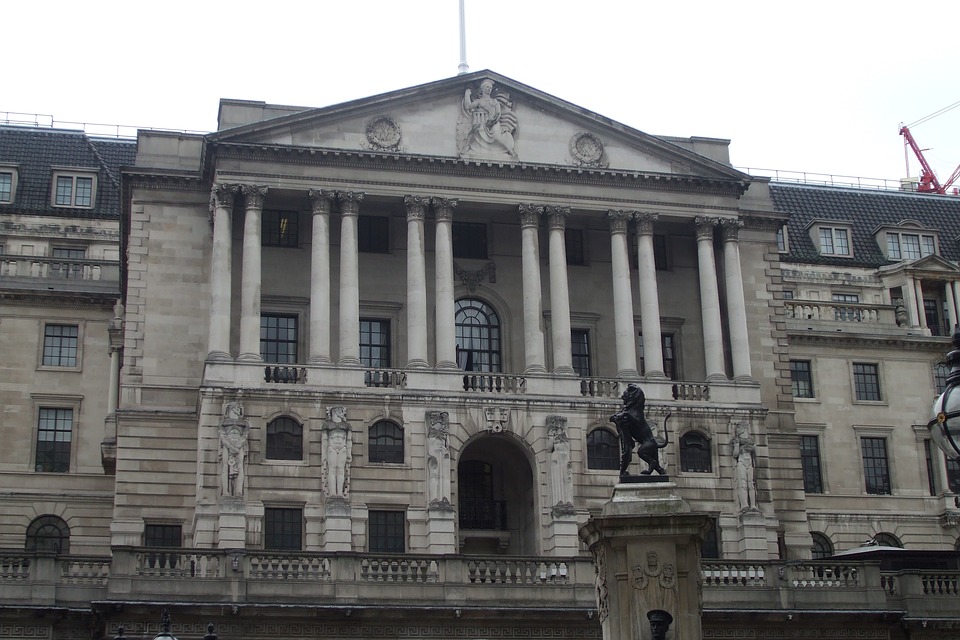
Bank of England predicts 7.25% growth in economy as interest rates held at 0.1%

The UK’s economy could grow by more than 7% in 2021, according to the latest Bank of England forecast – the fastest pace since the Second World War.

Their projection is that the UK gross domestic product (GDP) – a measure of the size of a country’s economy – will rebound by 7.25% and mark the best year of growth since official records began in 1948.
This represents a sharper recovery than the central bank’s previous forecasts, with 5% growth previously expected.
It comes after the pandemic saw the UK suffer the biggest drop in output for 300 years in 2020, when it plummeted by 9.8%.

But the Bank’s quarterly set of forecasts showed it downgraded its growth outlook for 2022, to 5.75% from 7.25%.

The rosier view for the economy this year came as the Bank’s Monetary Policy Committee (MPC) held interest rates at 0.1%.

To find out more about how we can assist you with your Second Charge Mortgage please click here

The Bank kept its quantitative easing programme on hold at £895 billion, although one member of the MPC voted to reduce it by £50 billion given the brighter recovery prospects.
In minutes of the latest decision, the Bank of England said the lockdown is set to see GDP fall by around 1.5% – far better than the 4.25% drop first feared.

It also sharply cut its forecasts for unemployment over the year.

The Bank said: “GDP is expected to rise sharply in 2021 second quarter, although activity in that quarter is likely to remain on average around 5% below its level in the fourth quarter of 2019.

“GDP is expected to recover strongly to pre-Covid levels over the remainder of this year in the absence of most restrictions on domestic economic activity.”

But it warned over “downside risks to the economic outlook” from a potential resurgence of Covid-19 and the possibility that new variants may be resistant to the vaccine.

Source: iTV

Discover our Second Charge Mortgage Broker services.

Marketing No Comments

Mortgage prisoners frustrated as MPs shun law change

Mortgage prisoners hoping for an end to high interest rates have been left frustrated and angry as MPs voted down a proposed law change that could have cut their bills by hundreds of pounds per month.

Mortgage prisoners are borrowers who took out high-interest home loans with lenders such as Northern Rock, which went under during the 2008 financial crash.

Because their mortgages were sold on to investment firms that do not offer new mortgages – known as ‘closed books’ – many have been trapped on standard variable rates as high as 9 per cent, at a time when wider interest rates have fallen to rock-bottom levels.

Many are on interest-only deals and cannot switch to a repayment mortgage, leaving them facing repossession when their term ends. There are estimated to be a quarter of a million mortgage prisoners in the UK, and the problem a ticking timebomb.

MPs voted down an amendment to the Financial Services Bill, which would have introduced a cap on the standard variable interest rates that mortgage prisoners pay.

This would have been no more than 2 percentage points above the Bank of England’s base rate, which would currently make it 2.1 per cent.

According to campaign group the UK Mortgage Prisoners Action Group, this could have cut some borrowers’ payments by up to £800 per month.

The amendment would also have made new fixed interest rate deals available to mortgage prisoners who met certain criteria, such as not being in arrears.

In a House of Commons debate on Monday night, 355 Conservative MPs voted to scrap the amendment, while 271 MPs from Labour and other parties voted to keep it.

Two Conservative MPs, Peter Bottomley and Royston Smith, voted against the Whip to support the move.

Mortgage prisoners usually find that other lenders will not accept them because banks and building societies adjusted their affordability requirements post-financial crisis and they now do not qualify.

Some have also fallen into arrears due to their high payments.

As a result, they say they have suffered financial hardship, but also emotional distress including mental health problems and family breakdowns.

Speaking to This is Money, Rachel Neale, head of the UK Mortgage Prisoner Action Group which represents around 4,000 borrowers, described the result of the Commons debate as ‘heavily disappointing’.

‘We have had 13 years of this, and we have still heard nothing of any tangible, practical solution,’ she said.

‘I don’t believe MPs really understand the mortgage prisoner’s situation,’ she added.

‘They are continually comparing us to borrowers in the open market, when we’re not in an open market – we’re essentially paying debt collectors.’

‘The Government are offering mortgage guarantees to first-time buyers – why not us?’

Neale is now calling for Government-backed mortgage guarantee scheme for mortgage prisoners, similar to the scheme it has just launched for first-time buyers.

‘We want a mortgage guarantee like the Government is offering first-time buyers,’ she said.

To find out more about how we can assist you with your Second Charge Mortgage please click here

‘They have no borrowing history, whereas we are borrowers who have been on high interest rates – and paid them – for 13 years.’

Because of the objection to the mortgage prisoner amendment, and one other in a separate part of the bill, the Financial Services Bill will now go back to the House of Lords for further debate later today.

The Lords voted through the bill 12 days ago, but it will be impossible to pass the legislation to help mortgage prisoners without the support of MPs in the House of Commons.

The Lords will either agree to the bill in its new form, or disagree and make alternative proposals.

If the latter happens, it will need to go back to the House of Commons again. This process is known as ‘ping pong’.

This is Money understands that Labour lords do not plan go against the Government’s position on the mortgage prisoner amendment in today’s debate, which would have kept the issue on the table.

It is unclear whether there is a way that the amendment could still be passed.

Treasury ‘will work with FCA’ on new solution – but prisoners say it could be too late

Speaking in the Commons, MP John Glen, the Treasury minister who has led the opposition to the amendment, cited Financial Conduct Authority analysis which, he said, showed that half of mortgage prisoners were not prisoners at all, because they would be eligible to switch mortgages if they chose to.

He also said the SVR cap would be ‘deeply unfair’ to borrowers in the mainstream mortgage market who were in arrears or unable to secure a new fixed-rate deal, as they would not be able to benefit from the same interest rate reduction.

On the point about offering mortgage prisoners new fixed-rate deals, he said: ‘Lending remains a commercial decision based on a variety of factors and it would not be right for the Government to compel lenders to provide products for specific groups.’

Glen announced that the Treasury would work with the FCA to review its data on the characteristics of mortgage prisoners.

However, Neale spoke of her fear for people who might not be able to hold out that long.

‘We now have to sit and wait with no other resolution while John Glen obtains more data, which means we could be stuck in this situation until next year,’ she said.

‘My real fear and worry is for people that are on a cliff edge facing repossession.

‘If they want to delay things for another six months while we are coming out of Covid, the Government should put a moratorium on repossessions for people on closed books.’

Glen also said the FCA would review how effective a previous policy to remove regulatory barriers to switching for mortgage prisoners had been, and would report on this by the end of November.

Since October 2019, lenders have been able to use a modified affordability assessment for mortgage prisoners, which means they can choose not to ask for evidence of a customer’s income and expenses or apply a stress test.

However, this is not compulsory on the part of the lender, and the UK MPAG says many mortgage prisoners are not able to benefit.

It said that it was only aware of 40 mortgage prisoners that had benefited from this to date.

‘As far as we know, it has only helped 40 people,’ said Neale. ‘And that was supposed to be the big golden nugget.’

Another way that mortgage prisoners may be able to get help is by bringing legal action against the private companies that now control their loans.

The law firm Harcus Parker is currently working with some mortgage prisoners in order to pursue such claims, but the process is at an early stage.

By HELEN CRANE FOR THIS IS MONEY

Source: THIS IS MONEY

Discover our Second Charge Mortgage Broker services.

Marketing No Comments

UK economy is building momentum as Covid restrictions ease

UK economy is building momentum and the Bank of England is expected to sharply upgrade its annual growth forecasts next week, as a Guardian analysis shows rapid progress rolling out the Covid vaccine is fuelling a boom in consumer spending.

Activity has held up better than expected after businesses adapted to life under the third national lockdown, while the reopening of non-essential retail and hospitality venues outdoors in England and Wales has benefited from pent-up demand.

Unemployment has fallen for two consecutive months, as companies started hiring again. Retail sales rebounded in March, before the official retail re-opening, as consumers began to spend accumulated savings and manufacturer confidence returned to levels not seen since 1973.

However, with India suffering a devastating third wave and nearly 5 million UK workers still on furlough, there are concerns over rising unemployment in Britain after government wage support is scaled back this summer and closed entirely by the end of September.

In the past year, the Guardian has tracked the economic fallout from the pandemic on a monthly basis, following infection rates, eight key growth indicators and the level of the FTSE 100. Faced with the deepest global recession since the Great Depression, the Covid crisis watch also monitors Britain’s performance compared with other countries.

As consumers return to high streets and pub beer gardens and take to alfresco dining, the Bank of England is poised to issue one of its most substantial economic growth upgrades in recent decades after a raft of positive data from the UK economy.

Threadneedle Street is expected to revise up its February forecast for a 5% rise in gross domestic product (GDP) this year closer to 7%, according to economists at the US investment bank Jefferies, even if autumn brings with it the reintroduction of some coronavirus restrictions. This would mark the fastest growth rate since 1941 when the UK economy was being pushed to the limit during the second world war.

Earlier this month, the International Monetary Fund said progress administering the Covid-19 vaccine and a more resilient performance than expected in many countries would power a faster global recovery from the pandemic in 2021.

To find out more about how we can assist you with your Second Charge Mortgage please click here

After contracting by 3.3% in 2020, the IMF said the world economy would now grow by 6% in 2021 and a further 4.4% in 2022 in a sign that substantial economic support from central banks and governments had managed to prevent a heavier toll.

Reflecting the improved prospects in the UK economy, the Washington-based fund forecasts the UK will go from one of the hardest-hit western economies in 2020 to the fastest-growing G7 country in 2022 – outstripping the US, Japan, Germany, France, Italy and Canada.

The stock market has rallied in the past month as infection rates have dropped, with travel, tourism and retail companies gaining most. However, fears over the relaunch of some restrictions are growing as Covid infection rates accelerate in India. Inflation is also starting to rise, amid concern that central banks will be forced to raise interest rates to prevent the world’s biggest economies from overheating.

Britain’s economy contracted by less than expected earlier this year despite the toughest Covid restrictions since the first wave of the pandemic, with growth returning in February as businesses and households prepared for the easing of controls after the government outlined its roadmap for exiting lockdown.

Retail sales rose by 5.4% in March – a month in which there was only a modest relaxation of coronavirus restrictions – in a sign of pent-up demand after months confined indoors, turbocharged by a rise in household savings among wealthier families while much of the economy was closed.

Consumer activity recovered further after the reopening of non-essential shops and hospitality outdoors on 12 April in England and Wales, with a 200% weekly rise in the number of people visiting retail destinations expected to translate into a sharp rise in spending. Meanwhile, industrial output is growing strongly, with manufacturers the most optimistic since 1973. After border disruption caused by Covid and Brexit led to the biggest fall in EU exports on record, continental trade is recovering, but frictions are expected to continue as an endemic feature of Brexit.

Unemployment in the UK fell for a second month in February, raising hopes that a full-blown jobs crisis can be avoided, as employers stepped up hiring to prepare for rising demand. Online job adverts have returned to pre-pandemic levels, while the unemployment rate fell to 4.9% in the three months to February – down from 5% in the three months to January and 5.1% in the three months to December.

However, almost 5 million people remained furloughed. Job losses are expected to rise once the scheme is made less generous in July and closed completely in September, while ongoing structural changes are expected as office workers take longer to return to city centres.

By Richard Partington

Source: The Guardian

Discover our Second Charge Mortgage Broker services.

Marketing No Comments

UK jobs: Why this recovery may be different

The UK jobs market has calmed down over the winter – thanks to furlough

When asked where UK unemployment will be at the end of this year, most economists – ourselves included – would probably say ‘higher than it is now’. But predicting how high remains a tricky question to answer and highlights how several aspects of the crisis in the jobs market differ from previous recessions.

Forecasting how high unemployment will be at the end of this year remains a tricky question

Let’s start with the noticeable difference – the furlough scheme. The extension of wage support through the winter lockdown – and now until the end of September – has helped the jobs market turn a tentative corner over recent months.

While payroll-based employment is still down some 2.4% on pre-pandemic levels, we’ve begun to see a gradual recovery outside of the consumer services arena – no doubt as firms have become more adept at operating through lockdowns. The admin/support sector, for instance, has now all-but-erased the 6.3% fall in employment seen amid the pandemic.

To find out more about how we can assist you with your Second Charge Mortgage please click here

Unemployment is likely to rise through the middle of 2021

Still, there is likely to be a further round of redundancies as the job retention scheme gradually comes to an end. The spike in job losses we saw last autumn, as firms prepared for the original October 2020 furlough end-date, shows what is at stake. Jobs data due tomorrow is likely to show the unemployment rate at roughly 5%, up from its pre-pandemic low of 3.8%.

One concern is that consumer services firms remain under financial pressure. Office for National Statistics survey data consistently pointed to low cash reserves and weak confidence among the hardest hit sectors through the first quarter.

Jobs data due tomorrow is likely to show the unemployment rate at roughly 5%, up from its pre-pandemic low of 3.8%

However, the critical difference this time is that wage support (and other measures) are set to remain available until well after many sectors reopen. The hope is that this will give firms enough time to get back on their feet and therefore support most commercially viable roles back from furlough. While there will inevitably still be job losses, the ongoing support schemes may mean that these can be limited to roles that no longer exist – for instance, where the pandemic has caused lasting structural changes to business models.

Migration is something of a wildcard for the jobs market
The second major difference compared to past recessions is the sharp spike in outward migration we saw last spring.

Economists are divided on its full extent, but recent ONS analysis suggests a 7.4% fall in the number of EU nationals on UK payrolls. That accounts for around a fifth of the drop in employment between 4Q19 and 4Q20.

Once vaccination rates have risen and Covid-19 cases stabilised across Europe, it’s probably fair to assume a proportion of these workers will look to return. At that point, we may see a further, though temporary, rise in unemployment if not all manage to find jobs straight away. But this too is somewhat uncertain – and the FT reported this weekend that businesses in London (where the population fall appears to have been most stark) have found it tricky to find enough staff for reopening.

This recovery may be quicker than past jobs recessions

Altogether, we think the UK unemployment rate will rise to 6-6.5% later this year. But unlike past recessions, it may not stay there for long.

To explain why it’s worth reflecting on the fact that so many of the job losses have so far been concentrated in the consumer services industry – something that is undoubtedly another unusual feature of this crisis. These industries (encompassing hospitality and arts, recreation and entertainment, and other services) have accounted for around half of the total fall in employment in 2020, though it varies slightly depending on which data you look at.

We think the UK unemployment rate will rise to 6-6.5% later this year. But unlike past recessions, it may not stay there for long

While this is not that surprising, it carries a potentially important implication for the recovery. Our chart below shows that these sectors typically weathered the previous three job recessions better than the broader economy, but more importantly, have often led the wider labour market out at the other end.

Consumer services tend to lead other sectors out of jobs market turbulence

One explanation is that the jobs market tends to be more fluid in these sectors.

Here, jobs are often created much more quickly than elsewhere – perhaps linked to the fact that they tend to be more insecure forms of employment and are typically lower paid. Employee turnover is also noticeably higher in the likes of hospitality and arts/entertainment/recreation sectors than elsewhere – and the chart below shows a rough upward-sloping relationship between those sectors that have made the heaviest use of the furlough scheme and those with higher staff churn.

Hardest-hit sectors tend to have higher rates of employee turnover

Assuming the economy continues to recover as currently predicted, the upshot is that at least some of the jobs lost so far may return relatively quickly. And in turn, that could mean the recovery in the overall jobs market towards pre-pandemic levels may be more rapid than after the global financial crisis. We’d still expect it to take some time for employment to recover fully, and it’s worth remembering that the upheaval caused by the new EU-UK relationship will also add pressure over time.

Returning to the question we posed at the beginning: will the unemployment rate be higher at the end of the year than today? The answer is probably yes.

But will it start to fall again by that point too? Barring another significant deterioration in the Covid-19 situation, there’s a fair chance that the answer may also be yes.

By James Smith

Source: Think Ing

Discover our Second Charge Mortgage Broker services.

Marketing No Comments

UK economy set to grow at fastest rate this year

The UK economy is set to grow at its fastest rate on record this year, experts have predicted.

The EY Item Club has upgraded its 2021 growth forecast from 5% to 6.8%, which would mark the fastest rate since official records began.

Chief economic advisor Howard Archer said the economy had “proven to be more resilient than seemed possible”.

The vaccine rollout and relaxed restrictions had helped the recovery, it said.

The UK’s GDP, which measures all the activity of companies, governments and individuals in the economy, shrank by a record 9.9% last year as coronavirus restrictions hit output, according to the Office for National Statistics.

But EY expects that the UK economy will return to its pre-pandemic size in the second quarter of 2022 – three months earlier than previously forecast.

Item Club economists also revised down their unemployment forecasts. The rate is now expected to reach 5.8% towards the end of this year, down from the 7% predicted in January.

Mr Archer said that the latest forecast suggested the economy would “emerge from the pandemic with much less long-term ‘scarring’ than was originally envisaged and looks set for a strong recovery over the rest of the year and beyond”.

He added : “While restrictions have caused disruption, lessons learned over the last 12 months have helped minimise the economic impact.”

To find out more about how we can assist you with your Second Charge Mortgage please click here

Figures released on Monday by Deloitte also suggest that the UK could be on track for a faster economic bounceback than previously thought.

Consumer confidence increased at the fastest rate in a decade in the first three months of 2021, according to its survey of 3,000 adults between 19 and 22 March.

Confidence rose by six percentage points to -11%, the Deloitte consumer tracker found.

“Going to a shop” topped the list of leisure activities people are most likely to do after lockdown, with 6 in 10 saying they plan to return within a month of restrictions lifting.

Ian Stewart, chief economist at Deloitte, said: “The UK is primed for a sharp snap back in consumer activity.

“High levels of saving, the successful vaccination rollout and the easing of the lockdown set the stage for a surge in spending over the coming months.”

In England and Wales, non-essential retail was allowed to reopen on 12 April.

Shops in Scotland will be allowed to reopen fully from Monday, while Northern Ireland is due to see non-essential retail reopen on 30 April.

Separate research published last Friday suggested that the recent easing of lockdown measures had triggered a surge in activity among UK firms.

A closely watched survey, produced by IHS Markit/CIPS, indicated that the looser restrictions had led to the fastest UK private sector growth since late 2013.

The IHS Markit/CIPS Purchasing Managers’ Index (PMI) rose to 60 in April, according to initial findings, up from 56.4 in March. Any figure above 50 indicates expansion.

The service sector grew faster than manufacturing for the first time since the Covid crisis began, the survey found, largely down to the reopening of non-essential shops seen in April.

Source: Hellenic Shipping News

Discover our Second Charge Mortgage Broker services.