

Marketing No Comments

Economic impact of crisis will be keenly felt in 2021

At times like these it is really scary to study economic forecasts.

We all know that no economic forecast is ever fully accurate, but when the set of reasonably reliable forecasts is as consistent as is now the case, and as uniformly troubling, then it is time to sit up and take a fair modicum of interest.

Let us start with the UK’s Office for Budget Responsibility, generally respected as informed and relatively unbiased.

This is a good place to start, as the OBR’s forecasts provide the basis upon which the UK Government’s budgets are based.

The OBR expects the UK economy to contract by 11.3 per cent this calendar year. This is apparently the sharpest decline since 1709 when the Thames froze over – although the 1709 data may be even less reliable than today’s!

They then see growth for 2021 at 5.5% followed by 6.6% in 2022. That sounds superficially decent, but note two caveats.

First, UK economic output – GDP being the key number – would not be back at where we were pre-pandemic until the last quarter of 2022; we will be returning from a very low base.

Second, if there were to be no deal on Brexit – which sadly looks to be an increasingly high risk – then the OBR suggests that UK output would be reduced by 2% initially, and would still be 1.5% below their ‘with deal’ forecast in 2026.

Looking elsewhere does not bring relief. Consider the EY ITEM Club, another generally respected source.

They suggest growth in 2021 of 6.2%, marginally above the OBR figure, and 4.3% in 2022, significantly lower than OBR. On this basis, “the economy is not seen as returning to its Q4 2019 size until Q4 2023”.

This is based upon the assumption of wide availability of a Covid-19 vaccine in the first months of next year (fingers crossed) and – wait for it – a free trade agreement being reached between UK and the EU.

Failure to reach such an agreement would, in their forecast, knock 2021 growth down to 5% and 2022 to 3.5%. This suggests that the UK would be lucky to regain the end-2019 level of GDP by the close of 2024 – four full years from now.

Seeking international comparators does not ease concerns.

The Organisation for Economic Co-operation and Development – OECD to its pals – sees the UK’s recovery next year from the Covid-induced recession as slower than any other major economy save Argentina.

UK GDP will, according to the OECD, be 6.4% lower at end 2021 than end-2019, while the world is up by a bare 0.6% and China up by nigh on 10%. All other major economies will remain below last year’s peak, but barely so for the US, by 3% for the EU and just 1.7% for Germany.

To find out more about how we can assist you with your Second Charge Mortgage please click here

There is no escape from the clear expectation that economic times will remain tough for the next couple of years, and particularly so in the UK. In some crucial aspects the impact will be more severe next year than has been the case in 2020.

Remarkably, while unemployment has eased upwards, the relative proportions of “working” and “workless” households had changed little in the year up to the third quarter in 2020. According to the ONS the share of “workless” households had risen by only 0.2 percentage points.

But these are artificial figures, in that so many billions of pounds have been provided to households via the Job Retention Scheme. That has been hugely valuable, but will come to an end at some time in early 2021. Then unemployment will shoot up.

The OBR sees an increase from just under 5% to 7.5% in the middle of next year. EY suggest 7%, but there seems general agreement that the peak level of unemployment will have been put back a few months by the Chancellor’s interventions and that peak will now be lower than previously anticipated. (But – excuse the cracked record – a touch higher again if there is no Brexit deal!)

So what to do? The first answer is definitively not to tighten the strings on the public purse either soon or sharply; a big “No” to austerity.

The UK public sector deficit is set this year to hit nearly £400 billion or 19% of GDP – the highest ever in peacetime. Inevitably tax revenues have fallen catastrophically while spending has skyrocketed.

The stock of Government debt has sailed past 10% of GDP, but the cost of servicing this debt is remarkably low as interest rates stay at rock-bottom levels; and, with inflation low and stable, rates look set to stay low for a good couple of years yet.

Over that period some tightening of the public finances will be required, but with caution and with great care being taken over where to temper expenditure and where to edge up taxation.

This should, of course, be based upon economic and public welfare considerations, not party politics.

As the Fraser of Allander Institute has wisely stated: “The need to remain flexible in the face of huge ongoing uncertainty is inevitable.”

In Scotland the UK’s Spending Review should result in a healthy increase next year in our core funding, but there will be a major decline in the “Covid consequentials”. Those are the extra funds allocated to Scotland for special measures to cope with the impact of Covid on individuals and businesses, and they will fall sharply, meaning that difficult choices will have to be faced.

Again, economic and public welfare considerations should be paramount – and the Scottish Government could benefit from a careful read of the new report from Carnegie on Gross Domestic Wellbeing – as an alternative measure of social progress.

Didn’t someone say that we need to “grow back better”?

Source: Herald Scotland

Discover our Mortgage Broker services.

Marketing No Comments

UK economy won’t reach pre-COVID-19 level for at least two years

UK economy will contract this quarter and it will take at least two years for GDP to reach pre-COVID-19 levels, according to a Reuters poll which also found London would agree a free-trade deal with the European Union.

As a second wave of the coronavirus swept across Europe, Britain, which has suffered the continent’s highest death toll from the pandemic, reimposed tough restrictions on economic activity.

Those lockdowns have particularly hurt its huge services industry as hospitality venues were forced to close and shops to shut their doors.

After a roaring third quarter in which it grew 15.5%, the economy is likely to contract 2.7% this quarter, deeper than the 2.5% contraction pencilled in last month, the poll found. Next quarter it will grow 1.7%.

“The scope for a swift bounce back in the first quarter is muted,” said Stefan Koopman at Rabobank.

“Even when the vaccine is rolled out relatively quickly and successfully, restrictions will largely remain in place and firms and households will have to adjust to the new trading relationship with the EU.”

After the historic 19.8% contraction in the second quarter the economy is expected to shrink 11.2% this year and expand 5.3% in 2021, little changed from last month, the Nov. 26-Dec. 1 poll of around 60 economists found.

Last month the Bank of England ramped up its stimulus to support the economy, increasing its bond-buying programme by an additional 150 billion pounds. Bank Rate was not expected to move from its record low of 0.10% until 2024 at least.

To find out more about how we can assist you with your Second Charge Mortgage please click here

Despite all the stimulus, when asked how long it would take for GDP to reach pre-COVID-19 levels, 18 of 26 respondents said at least two years. Seven said within two years and one said within a year.

“At the moment, forecasting UK GDP growth is highly uncertain and, given the massive GDP fall in 2020 alongside the still-unknown economic implications of the end of the Brexit transition period, scarring could turn out to be larger,” said Elizabeth Martins at HSBC.

Britain’s transition period of informal European Union membership following its departure from the bloc is due to finish at the end of the year and the two sides have still not agreed terms for their future trading relationship.

The EU will launch contingency measures on Wednesday or Thursday if it is unable to reach an agreement with Britain by then, a senior EU diplomat said. Michael Gove, who oversees Brexit talks for London, said on Tuesday talks were still stuck on fishing, governance rules and dispute resolution.

Asked if a “no deal” scenario was closer than anyone would admit, Gove told ITV: “It’s certainly the case that there is a chance that we may not get a negotiated outcome.”

But the poll found only a median 35% chance no deal is reached, down from 40% given last month. As in all Reuters polls since the June 2016 referendum vote to leave the bloc, respondents said the most likely outcome was still some form of free trade deal for goods.

“It is in the interests of both sides to reach an agreement,” said Peter Dixon at Commerzbank.

Reporting by Jonathan Cable

Source: UK Reuters

Discover our Mortgage Broker services.
Marketing No Comments

Risks to UK economy as Brexit deadline approaches

With the UK economy suffering more from the coronavirus than most advanced nations, the stakes couldn’t be higher as Brexit trade negotiations enter their endgame.

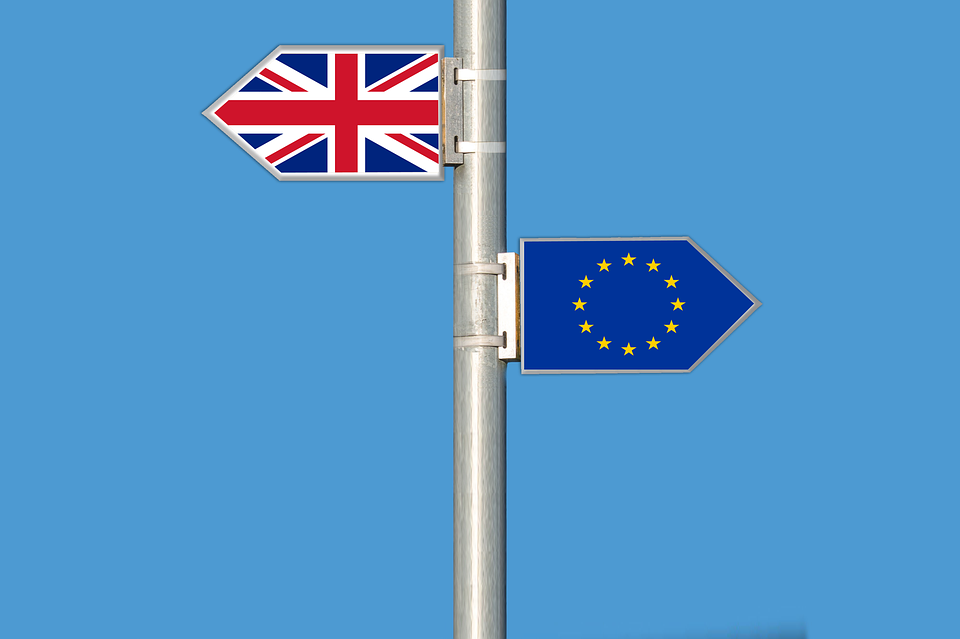
Gross domestic product (GDP) will likely be smaller than what it would have been had the UK stayed in the European Union (EU) regardless of the outcome.

But reaching an accord would help avoid major trade disruptions come Jan 1.

Leaving without a deal, meanwhile, means that Brexit could end up inflicting more lasting damage than the pandemic, according to economists. Both sides say the onus is on the other to make a decisive move before the transition ends in just over a month.

The pandemic has put Britain on course for its deepest economic slump since the Great Frost of 1709.

By the first quarter of 2025, GDP will be 3.1% lower than anticipated in March, according to estimates by the Office for Budget Responsibility (OBR) released on Wednesday. The fiscal watchdog deems the loss of output to be permanent.

To find out more about how we can assist you with your Second Charge Mortgage please click here

In a separate analysis, the OBR said transitioning into a free-trade agreement with the EU would shave 4% off GDP in the long run.

A no-deal scenario – meaning a shift to World Trade Organisation rules – would mean losing another 1.5%. Dan Hanson of Bloomberg Economics puts the combined cost higher still, at 7% of GDP.

Jobs are also on the line. Unemployment is set to peak at 7.5%, or 2.6 million people, next year under the OBR’s central scenario that a trade deal be reached. A no-deal exit pushes the rate up to 8.3%.

Financial services and export-reliant manufacturing sectors such as the car industry, food and textile producers stand to be among the hardest hit if trade talks fail.

There are concerns that the time and money spent dealing with the pandemic has left many firms ill equipped to cope with the potential costs and disruptions ahead.

A Bank of England survey of chief financial officers last month found less than 4% of them were fully prepared for the end of the transition period.

Before the pandemic, businesses were already holding back on spending as they awaited greater clarity over Britain’s post-divorce relationship with Europe.

No matter what the outcome of the talks, a period of adjustment is likely to make it hard for companies to know how best to invest for the future, but a move to WTO terms risks keeping spending depressed for longer, hitting already weakened productivity. — Bloomberg

Source: The Star

Discover our Mortgage Broker services.

Marketing No Comments

UK economy to suffer ‘largest fall in output for 300 years’ as GDP down 11.3% in 2020, says Sunak

Britain’s finance minister Rishi Sunak is outlining the UK government’s spending plans for the next year, against the backdrop of huge damage to the public finances wrought by the coronavirus pandemic.

Appearing before MPs, the Chancellor of the Exchequer said that while the health emergency was not yet over, the economic emergency was only just beginning.

Citing OBR (Office for Budget Responsibility) forecasts, he said the economy was due to contract by 11.3% this year, calling it the largest fall in output for 300 years.

Even as growth returned in the coming years, economic output would not go back to pre-crisis levels until the fourth quarter of 2022, and the economic damage from COVID-19 was likely to be lasting.

The pandemic and the response to it had caused a significant increase in borrowing and debt, Sunak said. Borrowing would be £394 billion (€441.8 billion) this year, or 19% of the country’s GDP, the highest in the UK’s peacetime history.

Funding for jobs and public services

The chancellor gave more details of spending plans for public services and to fight unemployment, having already announced £4.3 billion (€4.82 billion) in programmes to help people find work.

To find out more about how we can assist you with your Second Charge Mortgage please click here

Unemployment is set to rise to 7.5%, Sunak said, before falling to 4.4% by the end of 2024.

The government was spending £280 billion (€313.9 billion) to get the UK through the coronavirus pandemic, he added. The immediate priority was to save lives and livelihoods, but there would also be investment in hospitals, schools, infrastructure, creating jobs and growing the economy.

The Chancellor said there could not be an across-the-board pay rise in the public sector, but increases would instead target those most in need.

One million nurses and doctors in the NHS (the UK’s health service) will get a pay rise, he said. But increases will be paused in the rest of the public sector.

The government’s objective was to protect low incomes, he added, saying the 2.1 million lowest paid workers would get a £250 (€280) minimum rise. This meant most public sector workers would get a pay rise, Sunak said.

Waste ‘on an industrial scale’

Responding for the opposition Labour Party, shadow chancellor Anneliese Dodds said many key workers faced a pay freeze.

She criticised the amount of money spent on government contracts, saying those with connections to ministers had been many times more likely to get deals than others.

This was waste “on an industrial scale”, she added.

Dodds also highlighted the fact that the chancellor had made no mention of Brexit, despite the fact that no trade deal has yet been struck with the EU with only weeks to go before the transition period expires.

UK overseas aid to be cut

The finance minister confirmed that the UK would abandon its target of spending 0.7% of national income on overseas aid, instead reducing the proportion to 0.5% next year.

Spending so much on international aid was difficult to justify during a “domestic fiscal emergency” with borrowing so high, Sunak said. At a time of unprecedented crisis the government had to make tough decisions.

The UK was still the second biggest aid spender in the G7, he added.

Some in the Conservative government had argued for such a move. But it has been criticised by many, including several former prime ministers.

Nobel Prize laureate Malala Yousafzai joined the calls for Sunak to make sure that the commitment was not ditched.

“COVID-19 could force 20 million more girls out of school,” she said. “To keep girls learning, we need leaders to prioritise education,” she said, speaking before the minister’s announcement.

Source: Euro News

Discover our Mortgage Broker services.

Marketing No Comments

UK economic recovery slows in October

The speed of the UK’s economic recovery from coronavirus fell behind the global benchmark in October for the first time since June 2020, the Lloyds Bank UK Recovery Tracker found.

Real estate (52.4%) dropped below the benchmark in October, along with beverages and food (43.5), household goods (45), technology equipment (52.7), chemicals (51.9), real estate (52.4) and banks (55.2).

The Global PMI posted a reading of 53.3 in October, above the UK’s reading of 52.1.

Jeavon Lolay, head of economics and market insight, Lloyds Bank Commercial Banking, said: “The October data shows that the UK’s recovery was slowing after a strong economic rebound in the third quarter. At the sector-level, eleven of the sectors monitored by the tracker reported a weaker performance in October than during September.

To find out more about how we can assist you with your Second Charge Mortgage please click here

“The restrictions facing many businesses last month are now being compounded by various lockdown measures. However, while near term growth prospects will continue to be determined by the path of the virus and the extent of restrictions to control its spread, news of potentially viable vaccines is an encouraging development. If, as hoped, a vaccination programme is rolled out, the UK’s recovery should be revived and become more sustainable next year.”

UK manufacturing firms outperformed services businesses for an eighth consecutive month in October, highlighting the disparity with consumer facing sectors, such as tourism and recreation, when it comes to restrictions on trade.

The best performing manufacturing sectors, metals and mining and automobiles and auto parts, were relatively unaffected by the new measures introduced in October, with many experiencing rising order numbers as international supply chain disruption continued to ease following the end of the Spring lockdown.

A robust recovery in business activity across the United States (56.3) was the main contributor to the rising global benchmark, alongside strong performances by China (55.7), India (58.0) and Brazil (55.9).

Despite a slowdown in growth, the UK’s overall index was comparatively strong versus European nations that tightened Covid-19 restrictions earlier, with France (47.5), Spain (44.1) and Italy (49.2) all posting output contractions.

BY RYAN BEMBRIDGE

Source: Property Wire

Discover our Mortgage Broker services.

Marketing No Comments

Record surge in redundancies pushes UK unemployment to 4.8%

A surge in redundancies and a slump in hiring pushed UK unemployment up to 4.8 per cent in the three months to September, official data showed on Tuesday.

The figures reflect a wave of job cuts made as the government tapered wage support for workers furloughed under its Job Retention Scheme, which had been due to close at the end of October but has now been extended until the end of March next year.

Redundancies climbed to a record high of 314,000 between July and September, a rise of 195,000 from the previous year and 181,000 from the previous quarter, the Office for National Statistics said. Weekly figures showed especially strong growth during the first two weeks of September, when employers had to pay more towards the cost of furloughed workers in the run-up to the scheme’s scheduled end.

“The government’s failure to face up to the scale of this jobs crisis in time has cost people their livelihoods,” said Jonathan Reynolds, Labour’s shadow work and pensions secretary. He called on ministers to provide urgent support for those who had lost jobs and to fund the creation of new roles through green investment.

Rishi Sunak, the chancellor, said the figures “underline the scale of the challenge we’re facing”, adding: “I want to reassure anyone that is worried about the coming winter months that we will continue to support those affected.”

Job losses look set to climb further: the unemployment rate averaged 4.8 per cent over the three months to September, but experimental weekly figures from the ONS put it at 5.1 per cent by the end of that period.

The UK employment rate stood at 75.3 per cent in the three months to September, with 32.51m people in work — almost a quarter of a million fewer than a year earlier.

To find out more about how we can assist you with your Second Charge Mortgage please click here

Despite the weakening of the labour market, unemployment remains well below the worst-case projections of the Office for Budget Responsibility, and economists said the extension of government income support would both delay and limit the damage.

The fall in employment was especially steep for young people, with a drop of 174,000 on the quarter among 16 to 24-year-olds, down to a record low of 3.52m. There was also a clear divide by gender, with men faring much worse than women. And there has been a dramatic drop in the foreign-born workforce, with the number of EU nationals working in the UK 364,000 lower than a year earlier, and the number of non-UK nationals from other countries down by 65,000.

Samuel Tombs, at the consultancy Pantheon Macroeconomics, said the chancellor’s change of tack on furlough had “greatly improved the near-term outlook for employment”, especially as hopes of a vaccine might now persuade companies to keep staff on their books over the winter in expectation of a recovery in demand next summer.

Tony Wilson, director of the Institute for Employment Studies, said the changes in unemployment and employment were “worrying but not catastrophic”, although the continued dearth of hiring was troubling.

He noted that the number of people starting a new job between July and September was even lower than it had been during the spring lockdown. “Every recovery is built on a rebound in hiring but it didn’t happen in the summer,” he said.

This lack of hiring is one reason why youth unemployment has risen much faster than the overall jobless rate, with few openings for new labour market entrants.

Separate figures published on Wednesday by the Institute of Student Employers show a 12 per cent drop in the number of graduate jobs in 2020, and a much bigger fall in the number of internships and placements that often lead to permanent roles, with most employers also planning to cut recruitment in 2021.

Business groups, think-tanks and unions said government policy was now too narrowly focused on protecting jobs, and urged ministers to do more to spur new job creation, by cutting employer taxes, or by directly funding new jobs in the green economy and public services.

The ONS data gave some early signs of the labour market starting to pick up in the autumn, but this was before the spread of local Covid-19 restrictions and the announcement of the second national lockdown.

The ONS said data from HM Revenue & Customs suggested only a slight drop of 33,000 in the number of payroll employees between September and October, although this still left the number on company payrolls at 782,000 below pre-pandemic levels.

The number of vacancies advertised climbed steadily from August to October, driven by hiring in small businesses, but it remained almost a third lower than a year ago, even at the end of this period.

Annual growth in employees’ pay was stronger than the previous month — reflecting people returning to work on full pay after a period on furlough. However, this too was well below pre-pandemic levels, with annual growth of 1.3 per cent in total pay and 1.9 per cent in regular pay — the gap between the two measures reflecting lower bonuses.

And although the return of furloughed workers drove a rebound in working hours from the lows of the spring lockdown, average weekly hours were still below their level in March, and total weekly hours worked in the UK were more than a tenth below pre-pandemic levels.

“As the crisis enters its ninth month and second lockdown, job losses will continue to mount,” said Nye Cominetti, economist at the Resolution Foundation. “Crucially, this is as much about those out of work struggling to find new roles as it is about job losses.”

By Delphine Strauss

Source: Financial Times

Discover our Mortgage Broker services.

Marketing No Comments

ONS shows UK economy slowing, led by decline in hospitality

The UK economy recorded 15% growth in Q3 as lockdown restrictions were eased through the summer, but any real recovery has slowed and this slow down is led by the Covid-19 impact on hospitality.

Data from the ONS shows that national output expanded by just 1.1% in September, the third month of Q3 prior to the regional and now national lockdowns being introduced.

The ONS data did show the UK economy expanding for five consecutive months, most recently that momentum of recovery had decelerated. Record growth in Q3 followed a record drop of 19.8% in Q2 and a 2.5% drop in Q1.

The services sector, that includes hospitality has sustained the worst impact and is now 8.8% lower than it was before the first lockdown in March was imposed.

To find out more about how we can assist you with your Second Charge Mortgage please click here

The Chancellor of the Exchequer, Rishi Sunak was somewhat optimistic in his reflections saying: “Today’s figures show that our economy was recovering over the summer, but started to slow going into autumn. The steps we’ve had to take since to halt the spread of the virus mean growth has likely slowed further since then.

“But there are reasons to be cautiously optimistic on the health side – including promising news on tests and vaccines. My economic priority continues to be jobs – that’s why we extended furlough through to March and I welcome the news today that nearly 20,000 new roles for young people have been created through our Kickstart scheme.

“There are still hard times ahead, but we will continue to support people through this and ensure nobody is left without hope or opportunity.”

There is no doubt that the government’s economic aid to hospitality businesses to date has been significant. But, to avoid further business failures and unemployment figures unseen in a generation, more intervention is needed, and very soon.

Source: Hospitality & Catering News

Discover our Mortgage Broker services.

Marketing No Comments

The UK economy is heading back into recession

The Bank of England is pumping another £150 billion ($195 billion) into the UK economy after warning of a double-dip recession because of the coronavirus pandemic and an uncertain outlook because of Brexit.

The UK central bank said on Thursday that it would keep interest rates unchanged at a record low of 0.1% but would increase its purchases of UK government bonds to £875 billion ($1.1 trillion).
Restrictions introduced to tackle a rapid rise in Covid-19 cases would weigh on consumer spending to a greater extent than the bank projected in August, “leading to a decline in GDP” in the fourth quarter of this year, it added.

England re-entered a national lockdown on Thursday, with restaurants, bars and non-essential businesses closed until December 2. The United Kingdom reported its second-largest daily increase in Covid-19 cases on Wednesday with 25,177 new infections recorded in 24 hours.
In a bid to soften the blow to households and businesses, UK finance minister Rishi Sunak on Thursday announced that the British government would extend its furlough program through March 2021. The government will pay 80% of the wages of employees of businesses forced to close, capped at £2,500 ($3,270) per month.

To find out more about how we can assist you with your Second Charge Mortgage please click here

The lockdown and unresolved talks on a post-Brexit trade deal with the European Union left the outlook for the UK economy looking “unusually uncertain,” the Bank of England said. Without an EU deal, UK-based companies face hefty tariffs, quotas and other barriers to doing business with the country’s biggest export market from January 1.
“It depends on the evolution of the pandemic and measures taken to protect public health, as well as the nature of, and transition to, the new trading arrangements between the European Union and the United Kingdom. It also depends on the responses of households, businesses and financial markets to these developments.”
The central bank expects the economy to shrink by 2% in the fourth quarter, and by 11% in 2020.
Over the longer run, scarring caused by the pandemic will reduce the country’s economic output by roughly 1.75%. GDP is not expected to exceed the level it reached at the end of 2019 until the first quarter of 2022.
A survey of business activity published Wednesday showed the increase in private sector activity last month was the weakest since June, with new orders declining and employment dropping.

“November’s lockdown in England and a worsening Covid-19 situation across the rest of Europe means that the UK economy seems on course for a double-dip recession this winter and a far more challenging path to recovery in 2021,” said Tim Moore, economics director at IHS Markit, which compiled the survey.
The UK economy is expected to have rebounded strongly in the third quarter after suffering the biggest GDP fall of any major economy in the second. It also shrank by 2.5% in the first three months of 2020.

By Mark Thompson, CNN Business

Source: CNN

Discover our Mortgage Broker services.

Marketing No Comments

ONS finds 2m people still on furlough days before scheme ends

Almost one in 13 UK workers, about 2 million people, are still on furlough just days before the government job retention scheme comes to an end, according to the Office for National Statistics.

The regular ONS update on the economy during the coronavirus pandemic found 7.5% of the UK workforce was still relying on wage support from the government between 5 and 18 October.

The proportion on furlough was a quarter of that at the start of June, when 29.5% of workers had some of their wages paid by the government.

At its peak more than 9 million people’s wages were sustained by the scheme, which initially covered 80% of a worker’s wages. The job retention scheme (JRS) ends on Saturday, closing the first phase of the government’s economic response to Covid-19.

The Guardian Today newsletter: the headlines, the analysis, the debate – sent direct to you
Read more
The JRC is being replaced by the less generous job support scheme (JSS), which will cover up to two-thirds of an employee’s salary if they work 20% of their usual hours. However, Labour has expressed concerns that the replacement scheme does not do enough for workers in industries that remain severely affected by local lockdowns, such as the cinema sector, and that as a consequence unemployment will rise sharply in the run-up to Christmas.

Economists and trade unions have issued warnings that the new support measures announced by the chancellor, Rishi Sunak, will not be sufficient to protect jobs or save businesses from collapse, as the rates of Covid-19 infections increase and further local lockdowns are imposed.

To find out more about how we can assist you with your Second Charge Mortgage please click here

Nottinghamshire will be the latest area to enter tier 3 restrictions on Friday, and West Yorkshire is expected to follow within days. This will leave more than 11 million people in England under the tightest level of restrictions while the whole of Wales begins the second of a two-week “fire break” lockdown.

Frances O’Grady, the general secretary of the TUC, said the end of the furlough scheme would result in more redundancies, at a time when the number of coronavirus cases are rising across the country.

“No one should lose their job or be pushed into hardship by the tightening Covid restrictions, but from Saturday the amount of financial support available to workers will fall just as the public health crisis is getting worse. This will result in layoffs without further action from government,” O’Grady said.

The International Monetary Fund said on Thursday that Britain faced a difficult winter, with growing numbers of job losses and a further downturn in economic growth.

The IMF recommended the government increased spending on social protection to limit the economic impact of the second wave of the pandemic.

By Joanna Partridge

Source: The Guardian

Discover our Mortgage Broker services.

Marketing No Comments

UK economy at risk of double-dip after bouncing back strongly over the summer

UK economy bounced back strongly over the summer but fears are mounting that the recovery is running out of steam.

Retail sales climbed by another 1.5 per cent in September – taking gains in the third quarter of the year to a record 17.4 per cent.

Sales are now 5.5 per cent higher than they were in February before the full force of the pandemic struck, according to the Office for National Statistics report.

With household spending seemingly powering the recovery following the lockdown, the Ernst & Young Item Club estimated that the economy grew 16 per cent in the third quarter.

That follows a record contraction of almost 20 per cent in the second quarter. But it is feared that the recovery is faltering as fresh restrictions to prevent a second wave of the virus take their toll.

A separate report by IHS Markit showed the economy has lost momentum. Its purchasing managers’ index (PMI) – a key gauge of the private sector where scores above 50 show growth – fell from 56.5 in September to a four-month low of 52.9 this month.

‘The pace of UK economic growth slowed in October to the weakest since the recovery from the national Covid-19 lockdown began,’ said IHS Markit economist Chris Williamson.

‘Not surprisingly, the weakening is most pronounced in the hospitality and transport sectors, as firms reported falling demand due to renewed lockdown measures and customers being deterred by worries over rising case numbers.’

Warning that the fourth quarter of the year has started on ‘a weakened footing’, he added: ‘The risk of a renewed downturn has risen.’

Paul Dales, chief UK economist at Capital Economics, said Britain was at risk of a double-dip recession.

To find out more about how we can assist you with your Second Charge Mortgage please click here

He said the slowdown this month ‘comes before the full force of the latest Covid-19 restrictions are felt and supports our view that GDP will stagnate in the final three months of the year, if not contract again.’

He added: ‘The PMIs suggest you shouldn’t read too much into the decent rise in retail sales in September.

‘Instead, the renewed downward trend in the PMIs provides a better sense of what’s happening to the overall economy. And it’s not looking good.’

The UK economy contracted by 2.5 per cent in the first quarter of the year and by a record 19.8 per cent in the second quarter as the closure of businesses wreaked havoc.

While the economy bounced back over the summer, it is feared that strict restrictions will derail the recovery.

Sam Miley, an economist at the Centre for Economics and Business Research, said: ‘Some fragility is likely to arise in the coming months.

‘This stems from the increasingly widespread reimplementation of restriction measures across the country, with this set to impact consumer behaviour.’

By HUGO DUNCAN FOR THE DAILY MAIL

Source: This is Money

Discover our Mortgage Broker services.