

Marketing No Comments

Perfect storm of glitches constrains UK economy

Severe shortages of raw materials, constrained labour supply and persistently high furlough rates are putting the UK economy in a vice, according to new official figures released today.

The Office for National Statistic’s latest business insights survey shows almost one in three hospitality firms are finding it harder to recruit workers compared to normal times.

One in four businesses reported higher prices for key inputs used in production processes, up from 21 per cent in May, with half of construction firms noting increases in input costs.

A staggering 67 per cent of businesses said a paucity of suitable candidates to fill roles was putting the brakes on recruitment activity, with professional and scientific firms experiencing the most acute skills shortages.

Despite figures released by the Treasury this morning showing the number of furlough workers had dropped to its lowest level since the onset of the Covid crisis, the rate at which people are leaving the scheme has slowed.

340,000 left furlough July, down sharply from 550,000 in June, prompting experts to warn Britain could face higher joblessness after the scheme winds down fully in just three weeks’ time.

To find out more about how we can assist you with your Second Charge Mortgage please click here

Charlie McCurdy, Economist at the Resolution Foundation, said: “The number of people coming off furlough over the summer has slowed to a trickle, as some firms and sectors – notably overseas tourism – struggle to return to pre-pandemic levels of activity.”

“As a result, up to a million employees could still be on furlough when the scheme closes at the end of this month.”

“While we expect most of these staff to return to their previous roles, a significant number will not, and we could see a fresh rise in unemployment this autumn.”

There are still 1.6m people on furlough, highlighting the scale of the mismatch between the supply of and the demand for labour in the UK. Data released by the Recruitment and Employment Confederation and KPMG today shows candidate supply levels fell at the fastest rate on record in August, while businesses ramped up hiring activity.

Severe supply and demand imbalances are prompting businesses to raise wages in a bid to attract talent, which is fuelling inflationary pressures. However, according to the ONS, 15 per cent of all British businesses cannot afford higher wages to attract workers.

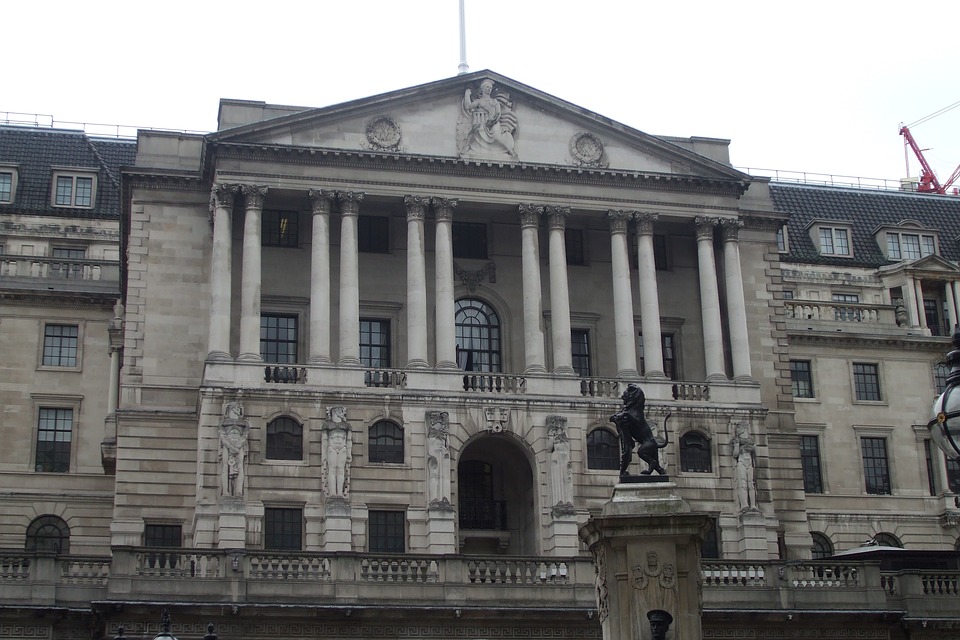
There are concerns over whether worker shortages will clear. The governor of the Bank of England, Andrew Bailey, warned yesterday he is worried about persistent worker shortages producing stickier than expected inflation.

The ONS estimates inflation currently stands at two per cent annually. But, the Bank expects it to rise to four per cent by the end of the year.

By Jack Barnett

Source: City AM

Discover our Second Charge Mortgage Broker services.

Marketing No Comments

UK economy lost more momentum in August, PMI survey shows

UK economy – Britain’s economic recovery from the COVID-19 pandemic lost more momentum last month than originally estimated as staff shortages and supply chain issues weighed on companies in the country’s huge services sector, a survey showed on Friday.

The IHS Markit/CIPS UK Services Purchasing Managers’ Index (PMI) fell to 55.0 in August, revised lower from a preliminary “flash” reading of 55.5 and down sharply from 59.6 in July.

Overall the survey added to signs that British economic growth has slowed somewhat in the last month or so.

The PMI marked a fifth month above the 50 threshold for growth and a record share of services companies said they were hiring staff – but they also struggled against rising costs.

To find out more about how we can assist you with your Second Charge Mortgage please click here

“Many survey respondents commented on long wait times to fill vacancies and an unexpectedly high staff turnover as the UK economy reopened,” said Tim Moore, economics director at IHS Markit.

A separate survey published earlier on Friday by the Recruitment & Employment Confederation also showed employers were still hunting for more staff than they were just before the pandemic, added to signs of a tight labour market after COVID-19 lockdowns and Brexit.

IHS Markit said consumer demand slowed last month after an initial post-lockdown surge.

Others said a slowing property market caused by partial withdrawal of a tax break on home purchases, a lack of tourists and Brexit trade frictions dampened growth too.

The composite PMI, which combines the services and manufacturing sectors, fell to 54.8 in August from 59.2 in July.

Reporting by Andy Bruce

Source: UK Reuters

Discover our Second Charge Mortgage Broker services.

Marketing No Comments

Possession claims double as evictions ban ends but are way off ‘normal’

Evictions by landlords and letting agents have restarted with earnest following the recent relaxation of court and bailiff restrictions, latest official figures show. The Ministry of Justice (MoJ) reveals that between April and June this year, possession claims more than doubled from 3,023 to 7,000; orders from 656 to 5431; warrants from 274 to 3,709 and repossessions from zero to 1516.

But, when compared to the same quarter in 2019, these actions have decreased by 74%, 75%, 73% and 80% respectively.

The evictions data reveals how the ongoing delays and complications of evicting tenants unless they are in serious rent arrears has prevented the ‘tsunami’ of eviction that had been predicted by some campaigning groups.

To find out more about how we can assist you with your Second Charge Mortgage please click here

For example the MoJ figures also show that the median average time from claim to eviction has increased to just under 60 weeks, up from 19 weeks in the same period during 2019.

Nevertheless, repossession activity in the courts is beginning to ramp up, as is bailiff activity following the lifting of restrictions on 1st June.

But lobbying group Generation Rent is worried that many tenants are still facing eviction.

alicia kennedy evictions“There are thousands more who have lost work and got behind on their rent during the pandemic, and will find it difficult to repay that, even if their income recovers,” says Director Alicia Kennedy (pictured).

“It is almost impossible to move to a new home if you’re relying on benefits, so these renters face huge uncertainty in the months ahead while they wait to be told when the bailiffs will arrive.

“Only a Covid Rent Debt Fund to clear these rent arrears will help renters back to their feet and remove the threat of homelessness from thousands of families. The government must act urgently to relieve this hardship.”

By Nigel Lewis

Source: The Negotiator

Discover our Second Charge Mortgage Broker services.
Marketing No Comments

The UK economy is on a bumpy road to full recovery

UK economy – The economic effect from Covid-19 wasn’t actually that bad, was it? That may seem an odd thing to ask in an economy that shrank by 25 per cent in little over a month last spring, and whose recovery lags major competitors.

However, after last week’s bumper GDP growth figures, it isn’t as wide of the mark as you might think.

In simpler times, the 4.8 per cent quarterly growth we experienced through the spring would be near-enough unprecedented.

With the economy “only” a little over 2 per cent smaller in June than it was pre-virus, it’s almost guaranteed that the full recovery from the Covid-19 hit will be considerably quicker than after the global financial crisis of 2008.

Then, GDP took five years to recover; this time it’ll be closer to two.

The economic charts from the past two years reveal what looks much more like a “V-shape” recovery than many economic commentators had dared predict.

Yet, it’s too early to pop the Champagne corks. Further strong gains in economic growth will be harder to achieve.

While the UK will reach pre-Covid levels of activity early next year, it will take much longer for the economy to get back to where it would have been, had the pandemic never happened.

To find out more about how we can assist you with your Second Charge Mortgage please click here

The biggest challenge will be keeping up confidence; rising optimism amidst a rapid vaccine roll-out undoubtedly helped boost consumer activity last quarter. But the Delta variant – and the resulting “pingdemic” – has tested the public’s appetite to shop and socialise.

People are slightly more reluctant to leave home, if you look at the regular Office for National Statistics (ONS) social survey, and the recent recovery in card spending and transport usage has also stopped firmly in its tracks.

Worrying headlines about NHS pressure over the winter is only likely to amplify the consumer caution that has crept back in over recent weeks.

That matters, because as the International Monetary Fund (IMF) argued last year, people’s individual decisions to stay at home have often had a greater effect on economic activity than lockdowns themselves.

There are other challenges, too, as unemployment is still likely to rise as the furlough scheme ends, despite what the Bank of England forecasts say.

Pictures of empty supermarket shelves don’t help either. That’s not just a Brexit/pingdemic problem. Global supply chain disruptions are hitting British producers and pushing up prices. Meanwhile, the Treasury is preparing to dial back economic support over the winter.

As Boris Johnson keeps telling us we’re not “out of the woods” as far as Covid is concerned, the same is perfectly true for the UK economy.

By James Smith

Source: iNews

Discover our Second Charge Mortgage Broker services.

Marketing No Comments

The UK economy is well positioned for GDP growth

The avoidance of a no-deal Brexit has removed a major downside risk for the UK economy, says Giles King the CEO at Mayfair Capital

Despite uncertainties surrounding Covid-19, the UK economy is projected to deliver significant GDP growth over the next five years and should find itself among the fastest growing European countries, underpinned by strong consumer spending trends.

The avoidance of a no-deal Brexit has removed a major downside risk for the UK economy.

Business confidence is high, and companies are likely to resume investment after adopting a “wait and see” approach in recent years.

Meanwhile, even though a deal with the EU covering financial services remains elusive, the UK has been increasingly diversifying away from finance since 2012, in favour of technology and professional services.

Consequently, the risk to overall employment is lessening. In addition, the UK’s strong early vaccination programme and high vaccine acceptance should unleash significant pent-up consumer demand.

Business activity has already recovered rapidly, with all sectors witnessing expansion, as evidenced by the 4.8 per cent growth recorded for the UK economy in the second quarter of 2021.

To find out more about how we can assist you with your Second Charge Mortgage please click here

This provides a firm foundation for increased occupational demand across all types of real estate. In the past, strong real estate performance has followed economic downturns – after the dot-com crash of 2000 and the financial crisis in 2008, for example.

In our view, UK real estate is poised for a strong and rapid performance rebound in the period ahead. Aside from economic fundamentals, there is a clear rationale for UK real estate investment. First, the real estate yield spread over gilts is extremely wide, and UK property appears underpriced relative to European markets.

According to JLL’s Global Transparency Index, the UK’s real estate market, which see more than €60bn (£51bn) in investment per year, is one of the largest in Europe, as well as the most transparent, and this should support demand.

Prime London city office yields in the final quarter of 2020 remained at Q4 2016 levels and were higher than other major European cities. In contrast, in markets such as Paris, Berlin, Munich and Madrid, prime yields have fallen below Q4 2016 levels, in some cases by up to 80 basis points.

While economic trends are positive, the recovery will not be universal. The pandemic has hastened structural changes that have been evolving for several years.

This is evident between sectors and within sectors, as shifting occupational demand creates vast differences between locations and assets.

Conditions in the UK real estate market indicate clear opportunities for growth. But in a polarising market, the risks are numerous.

By Giles King

Source: iNews

Discover our Second Charge Mortgage Broker services.

Marketing No Comments

Bank of England sets out plans to wean UK economy off stimulus

The Bank of England said on Thursday it could see a modest reduction ahead in the huge support it has provided to Britain’s economy during the COVID-19 pandemic and set out how it could gradually tighten monetary policy.

For now, the central bank decided to keep its stimulus at full speed, even though it expects inflation to jump to 4.0% around the end of the year.

Only one of the BoE’s eight monetary policy-makers, Michael Saunders, voted to reduce the size of its bond-buying programme which remains unchanged at 895 billion pounds ($1.25 trillion).

The vote to hold its benchmark interest rate at a historic low of 0.1% was unanimous, as expected.

With more than 70% of adults in Britain now fully vaccinated against COVID-19 and most social-distancing rules lifted, Britain’s economy has recouped much of its 10% crash of 2020.

This has prompted the BoE, like other central banks around the world, to spell out how it eventually plans to rein in its stimulus.

The BoE’s rate-setting committee said “some modest tightening” of monetary policy over its three-year forecast period was likely to be necessary .

It said it would start reducing its stock of bonds when its policy rate reaches 0.5% by not reinvesting the proceeds of maturing debt, as long as that made sense for the economy.

Markets have priced in BoE rates reaching that level only in late 2023 or early 2024, after a first rate rise to 0.25% around August next year.

The BoE also said it would consider actively selling down gilt holdings when the rate reaches at least 1%.

Previous guidance, from June 2018, said the BoE would not start to unwind bond purchases until Bank Rate was near 1.5%.

Governor Andrew Bailey said much had changed in the past three years and “if we stuck with 1.5%, when you look at the market curve, that would be tantamount to saying that we would actually never reduce the … balance sheet as things stand today.”

To find out more about how we can assist you with your Second Charge Mortgage please click here

GRADUAL TAPER

The scale of the BoE’s asset purchases came under fire from lawmakers in Britain’s upper house of parliament last month, who suggested the bank was “addicted” to buying bonds. read more

Bailey called this a “very poor choice of language” as it had a “very damaging meaning for people who are suffering”, and denied the BoE was trying to reduce government borrowing costs.

Sterling was little changed after the announcement. British government bond prices were slightly lower.

“The Bank has given its fair share of false signals on this in the past, but the broad messaging is consistent with a number of other global central banks that are preparing markets for the very gradual tapering of monetary support,” Luke Bartholomew, an economist at Aberdeen Standard Investments, said.

The Federal Reserve’s top policymakers are also showing signs of a split about how quickly the U.S. central bank might need to scale back its quantitative easing plan. read more

TEMPORARY INFLATION

Bailey said unemployment was no longer expected to rise when finance minister Rishi Sunak’s job-protecting furlough scheme is phased out at the end of September. The key challenge for the economy was now whether firms could fill vacancies. read more

A big jump in wages could add to British inflation which hit 2.5% in June and which the BoE said was now on course to rise even further above its 2% target in the months ahead, touching 4.0% in late 2021 and early 2022, its highest in 10 years.

In May, it had forecast a peak of 2.5%.

But the BoE said it still thought the jump in inflation would prove to be temporary.

It forecast that inflation in two years’ time would be just above its 2% target. Deputy Governor Ben Broadbent said the forecast should not be read as a policy signal, and noted that inflation was below target in three years’ time.

The BoE said it expected Britain’s economy would grow by 7.25% in 2021, unchanged from its May forecast, one of the fastest expansion rates among big, rich economies. It edged up its estimate for growth in 2022 to 6%.

The MPC is due to return to its full strength of nine members once it appoints a new chief economist.

Source: Reuters

Discover our Second Charge Mortgage Broker services.

Marketing No Comments

FLA: Second charge mortgage new business volumes up 195%

Second charge mortgage new business volumes grew by 195% in June 2021, according to the Finance & Leasing Association (FLA).

As a result, the number of new agreements in June was 1,960, and the value of this new business was £91m.

In the three months to June 2021, the number of new agreements rise by 208% to 5,853 and the value of new business increased by 217% to £260m.

To find out more about how we can assist you with your Second Charge Mortgage please click here

Annually, the total number of new agreements fell by 21% to 19,903 and the value of new business dropped by 24% to £833m.

Fiona Hoyle, director of consumer and mortgage finance and inclusion at the Finance & Leasing Association (FLA), said: “The second charge mortgage market continued its recovery in June as new business grew for a third consecutive month.

“In H1 2021, new business volumes increased by 21% compared with the same period in 2020, and we expect further growth during the second half of this year.”

By Jake Carter

Source: Mortgage Introducer

Discover our Second Charge Mortgage Broker services.

Marketing No Comments

IMF predicts UK economy to grow fastest of all G7 nations

The UK economy is set to recover much faster than expected from the Covid crisis as a resurgence in consumer spending and the success of the vaccine rollout boosted official forecasts.

According to the International Monetary Fund’s latest World Economic Outlook report, the UK economy will expand seven per cent this year, a sharp increase from the 5.3 per cent predicted in the Fund’s previous report in April.

The seven per cent expansion is the joint highest rate of all advanced economies, tied with the US. However, the American economy suffered a 3.5 per cent contraction last year, meaning if the US reaches the IMF’s forecast, its economy will have recovered from the Covid hit.

Of all the group of G7 seven nations, the UK suffered the harshest hit from the Covid crisis, with economic output plummeting 9.8 per cent in 2020.

The IMF also expects growth next year to be slower than first thought, down 0.3 per cent to 4.8 per cent – still the second fastest among G7 nations.

The reopening of the services sector of the economy – which the UK relies heavily on – after the successful relatively earlier rollout of Covid vaccines compared to its peers has triggered a resurgence in economic activity in the UK, prompting the IMF to raise its forecasts.

Responding to the report, chancellor Rishi Sunak said: “There are positive signs that our economy is rebounding faster than initially expected, with the IMF forecasting the UK to have the joint highest growth rate in 2021 among the G7 economies.”

To find out more about how we can assist you with your Second Charge Mortgage please click here

“That said, we still face challenges ahead as a result of the impact of the pandemic, which is why we remain focused on protecting and creating as many jobs as possible through our Plan for Jobs.”

The enormous stimulus programmes launched by advanced economies to protect households’ income, jobs and prevent business bankruptcies is likely to push their combined debt-to-GDP ratio to 122.5 per cent by the end of this year.

The IMF expects Japan to have the slowest rate of output expansion of all advanced economies in 2021, rising 2.8 per cent, reflecting relatively longer lockdown periods in the country.

Europe’s largest economy, Germany, is forecast to have the second worst rate of growth at 3.6 per cent. Italy is third with a 4.9 per cent expansion.

China is expected to gain a greater share of the global economy.

Access to vaccines determines economic trajectory, warns IMF
The economic trajectory of each country has become more determined by their access to Covid vaccines, the IMF warned in the report.

Advanced economies have largely rolled out vaccines at a rapid rate, while a large proportion of emerging market and developing economies have struggled to secure enough vaccine supply to distribute among their populations.

These disparities in vaccine allocation has resulted in the global economic recovery “split[ting] into two blocs: those that can look forward to further normalisation of activity later this year (almost all advanced economies) and those that will still face resurgent infections and rising Covid death tolls” the IMF said.

Gita Gopinath, the IMF’s chief economist, said: “growth prospects for advanced economies this year have improved by 0.5 percentage points, but this is offset exactly by a downward revision for emerging market and developing economies driven by a significant downgrade for emerging Asia.”

The Fund called on countries that had procured excess doses – mostly rich economies – to donate vaccines to nations with low supply levels.

IMF urges central banks to keep monetary policy loose
The Fund urged central banks to maintain ultra-loose monetary policy in order to prevent a slowdown in the global economic recovery.

The Fund dismissed recent sharp price rises as purely “transitory” and said central banks should “avoid tightening until there is more clarity on underlying price dynamics.” However, it did say central banks should be “prepared to move quickly.”

“The current spikes in annual inflation in part are the result of mechanical
base effects from last year’s low commodity prices. Moreover, prices have increased
because of the likely transient supply-demand mismatches,” it said.

Latest data shows inflation in the UK is already running higher than the Bank of England’s target, up 2.5 per cent annually in June.

Criticism of central banks’ adherence to quantitative easing is intensifying, with members of a House Lords committee publishing a report last week accusing QE of widening wealth inequalities.

By Jack Barnett

Source: City AM

Discover our Second Charge Mortgage Broker services.

Marketing No Comments

Job losses could surge as furlough support reduces from today

Redundancies could rise sharply in the months before the UK’s furlough scheme is fully wound down, a leading economic think tank has warned today.

The Institute for Fiscal Studies expects there to be a rise in “redundancies over the summer even before the final end of the scheme.”

Bosses will need to pick up 10% of their furloughed workers’ pay in July, rising to 20% in August and September before the scheme is removed entirely.

The IFS said it will cost businesses £322 in July to keep an employee earning £20,000 a year on the books.

In August and September this will rise to £489.

Tom Waters, a senior research economist at the IFS, says: “The furlough scheme does need to be wound down as the economy recovers, rather than attempting to keep every job on life support. But this does mean that some will end up unemployed.”

To find out more about how we can assist you with your Second Charge Mortgage please click here

Around 450,000 companies who still have furloughed staff will need to start picking up 10% of the bill from today, according to Labour Party statistics.

This will cost them a combined £225 million, the party said.

Over 2m workers still on furlough

According to data published by HMRC today, 2.4m people are still on furlough in the UK, down from a high of 9m in May 2020. However, the figure is dropping rapidly and around one million people were taken off the scheme in May.

Daniel Tomlinson, Senior Economist at the Resolution Foundation, says: “The grand reopening of the economy in May has caused over a million people to return to work from furlough. It’s especially encouraging to see so many young people – who have been hardest by the Covid economic crisis – finally returning to work.”

ONS data shows the labour market is recovering as economic activity starts to gather momentum as a result of coronavirus restrictions being lifted. The number of pay rolled employees rose for the sixth consecutive month in May 2021, up by 197,000 to 28.5m.

Chancellor Rishi Sunak said: “Our Plan for Jobs has supported people’s jobs and livelihoods throughout the pandemic and it’s fantastic to see so many people coming off furlough and into their workplaces with our restaurants, pubs and shops reopened.”

“These figures show what we always hoped would happen – that the scheme is naturally winding down as the economy reopens, but continuing to support those businesses and employees that need our help.”

By Jack Barnett

Source: City AM

Discover our Second Charge Mortgage Broker services.

Marketing No Comments

UK economic recovery to continue but new COVID-19 strains a threat

UK economy will expand rapidly this quarter as additional coronavirus-related restrictions are lifted and further pent-up demand is unleashed, a Reuters poll found, but growth is at risk from new variants of COVID-19.

The country has suffered the highest death toll in Europe from the pandemic but a fast-moving vaccine rollout has allowed the government to withdraw many of the lockdown restrictions, with more set to lifted on Monday. read more

Gross domestic product will grow 2.5% this quarter, the July 12-15 poll found, a touch better than the 2.4% predicted last month. But medians showed that pace was expected to slow to 1.4% next quarter and then to 0.9% in early 2022, unchanged from last month’s forecasts.

“So far, the UK data look promising in two respects. First, vaccines seem to have significantly reduced the health risks from the virus,” said Holger Schmieding, chief economist at Berenberg.

“Second, the UK’s GDP estimate for May shows that activity has rebounded with the easing of restrictions.”

GDP expanded a monthly 0.8% in May, much faster than its typical pre-pandemic pace but down from April’s 2.0% surge, official data showed last week. read more

On an annual basis, growth was pegged at 6.7% this year – much stronger than the 6.2% predicted last month – and an unchanged 5.2% in 2022.

But when asked what was the biggest threat to those buoyant numbers over 70% of respondents said the spread of new variants of COVID-19.

To find out more about how we can assist you with your Second Charge Mortgage please click here

“COVID-19 cases are rising quickly again and are showing few signs of slowing. With infection numbers doubling every 8-9 days, daily cases above 100,000 are entirely possible in the coming weeks,” said James Smith, an economist at ING.

“Rising COVID-19 prevalence also means higher rates of contact tracing and self-isolation. These risks amplifying the current worker shortage in some of the consumer services industries, but could also see consumers reducing social contacts to mitigate the risk of having to stay at home for 10 days.”

PRICE PRESSURES

Like its peers, Britain has faced steep inflationary pressures as supply chains disrupted by the pandemic and increased demand have led to price rises.

Inflation was expected to average 2.2% this quarter and peak at 2.7% next quarter. However, that upswing is likely to be transitory and is driven by the pandemic-induced low base of last year.

So while those forecasts are well above the Bank of England’s 2% inflation target the central bank was not expected to increase borrowing costs from their record low of 0.10% until 2023.

None of the 82 economists polled expected a change when the Bank announces is next policy review on August 5.

BoE interest rate-setter Michael Saunders said on Thursday the central bank could decide to stop its current programme of government bond purchases early due to an unexpectedly sharp rise in inflation, a day after another top BoE official said the time for action might be approaching. read more

“There is a risk, however, that inflation strength will prove more persistent, which may put more pressure on the BoE to tighten policy,” said Chris Hare, senior economist at HSBC.

“There are genuine supply-demand imbalances which have become apparent during the economic reopening, which we think could persist or even build in the near term.”

By Jonathan Cable

Source: Reuters

Discover our Second Charge Mortgage Broker services.