Marketing No Comments

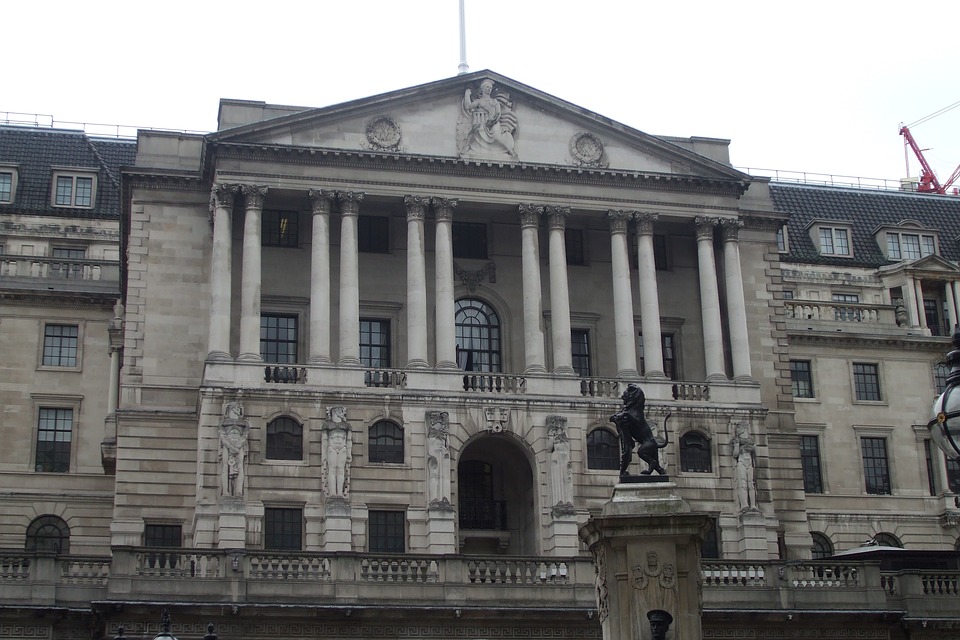
Bank of England governor says UK’s economic recovery is slowing

The governor of the Bank of England, Andrew Bailey, has warned UK’s economic recovery from Covid-19 is slowing amid supply chain disruption and staff shortages.

Answering questions from MPs on the commons Treasury committee, Bailey said there was evidence of the recovery “levelling off” despite the easing of pandemic restrictions earlier in the summer.

He said the economic fallout from the disease had “attenuated a lot” over recent months, helping growth to rebound. “But it’s still within the context of this imbalance in demand for goods and services. At the moment we’re seeing some levelling off of the recovery, the short-term indicators are suggesting that,” he said.

The Bank’s governor suggested that Covid disruption to global supply chains, which have upended industries from car making to hospitality, had proved more persistent than expected by Threadneedle Street earlier this year, as higher rates of coronavirus infections and heightened demand for manufactured goods put pressure on shipments.

To find out more about how we can assist you with your Second Charge Mortgage please click here

He said there had been an expectation that consumer demand for goods would increasingly switch to services as pandemic restrictions were relaxed, but that had so far not happened as much as expected. “There’s this underlying story of imbalanced demand, which we thought would by now have been well on the way to correcting itself,” he said.

Bailey said much of the inflationary pressure caused by the pandemic would eventually fade, adding that current high levels of global commodity prices – such as steel, agricultural goods and oil – were likely to fall because market prices typically tend to revert back to average levels over time. “We expect the bottlenecks to sort themselves out,” he added.

However, he expressed concern about a continued shortage of workers, which could last longer than material shortages and push up inflation. “Others will speak for themselves, but I have a bit more concern about persistence in the labour market story,” he told the committee.

Economists are concerned that shortages of workers and supplies, coupled with red hot demand for goods and services, could fuel persistently high levels of inflation as the UK emerges from the pandemic. Threadneedle Street forecasts inflation will hit 4% this year, before gradually falling back towards its 2% target rate.

Bailey said the Bank’s rate-setting monetary policy committee would probably be forced to raise interest rates from the current level of 0.1% to combat inflationary pressures over the next two to three years.

Lifting the lid on the MPC’s decision making process, he said the committee was evenly split four-four at its August meeting when weighing up whether the economic conditions had been met for raising borrowing costs.

Bailey said he felt the conditions for a rate rise had been met, while deputy governors Dave Ramsden and Ben Broadbent said they agreed. Silvana Tenreyro, an external member of the MPC, said she disagreed.

It comes after Michael Saunders, another external MPC member, said earlier this week that interest rates may needed to rise next year.

The MPC voted unanimously last month to keep interest rates unchanged, while Saunders cast a sole dissenting vote to stop short the Bank’s £895bn quantitative easing bond-buying programme.

By Richard Partington and Julia Kollewe

Source: The Guardian

Discover our Second Charge Mortgage Broker services.

Marketing No Comments

Staff shortages could last two years, warns CBI

A leading business group is urging the Government to take urgent action to tackle the staff shortages, warning that labour supply problems could last up to two years.

The CBI said there is growing evidence of staff shortages, which are continuing to disrupt firms as they battle to recover from the impact of the pandemic.

Director-general Tony Danker said the challenge extends beyond a lack of HGV lorry drivers, which is hitting supplies of goods to supermarkets, pubs and other businesses.

He called on ministers to marry skills policies to roles with the highest unfilled vacancies, add greater flexibility to the apprenticeship levy and use their “immigration levers” to alleviate short-term pressures.

The CBI said standing firm and waiting for shortages to solve themselves is not the way to run an economy.

Mr Danker said labour shortages are biting across the economy, adding: “While the CBI and other economists still predict growth returning to pre-pandemic levels later this year, furlough ending is not the panacea some people think will magically fill labour supply gaps.

To find out more about how we can assist you with your Second Charge Mortgage please click here

“These shortages are already affecting business operations and will have a negative impact on the UK’s economic recovery.

“Other European countries are also experiencing staffing shortages as their economies bounce back.

“In the UK, many overseas workers left during the pandemic, affecting sectors including hospitality, logistics and food processing, and new immigration rules make replacing those who left more complex.

“The Government’s ambition that the UK economy should become more high-skilled and productive is right, but implying that this can be achieved overnight is simply wrong, and a refusal to deploy temporary and targeted interventions to enable economic recovery is self-defeating.

“The CBI has heard from companies actively cutting capacity because they can’t meet demand, like the hoteliers limiting the number of bookable rooms because they don’t have enough housekeeping staff and can’t get linen laundered.

“Meanwhile, some restaurant owners have had to choose between lunchtime and evening services when trying to make the most of summer.

“It’s also visible to consumers when lead-in times for purchases like kitchens or furniture double.

“Employers back existing Government schemes to get people back into work, and businesses are already spending significant amounts on training, but that takes time to yield results, and some members suggest it could take two years rather than a couple of months for labour shortages to be fully eliminated.”

GMB union general secretary Gary Smith said: “We are paying the price for years of cost-cutting and austerity on workers’ pay and conditions.

“Instead of easing the labour market crisis, a furlough cliff-edge risks choking a recovery before it even begins.

“The lessons of the last decade must be learned – you can’t cut your way out of a crisis.

“It’s time to end Britain’s race to the bottom on pay and conditions.”

A Government spokesman said: “We are closely monitoring labour supply and working with sector leaders to understand how we can best ease particular pinch points. Similar challenges are being faced by other countries around the world.

“We want to see employers make long-term investments in the UK domestic workforce instead of relying on labour from abroad. Our Plan for Jobs is helping people across the country retrain, build new skills and get back into work.

“The Government encourages all sectors to make employment more attractive to UK domestic workers through offering training, careers options, wage increases and investment.”

Source: Shropshire Star

Discover our Second Charge Mortgage Broker services.

Marketing No Comments

UK economy lost more momentum in August, PMI survey shows

UK economy – Britain’s economic recovery from the COVID-19 pandemic lost more momentum last month than originally estimated as staff shortages and supply chain issues weighed on companies in the country’s huge services sector, a survey showed on Friday.

The IHS Markit/CIPS UK Services Purchasing Managers’ Index (PMI) fell to 55.0 in August, revised lower from a preliminary “flash” reading of 55.5 and down sharply from 59.6 in July.

Overall the survey added to signs that British economic growth has slowed somewhat in the last month or so.

The PMI marked a fifth month above the 50 threshold for growth and a record share of services companies said they were hiring staff – but they also struggled against rising costs.

To find out more about how we can assist you with your Second Charge Mortgage please click here

“Many survey respondents commented on long wait times to fill vacancies and an unexpectedly high staff turnover as the UK economy reopened,” said Tim Moore, economics director at IHS Markit.

A separate survey published earlier on Friday by the Recruitment & Employment Confederation also showed employers were still hunting for more staff than they were just before the pandemic, added to signs of a tight labour market after COVID-19 lockdowns and Brexit.

IHS Markit said consumer demand slowed last month after an initial post-lockdown surge.

Others said a slowing property market caused by partial withdrawal of a tax break on home purchases, a lack of tourists and Brexit trade frictions dampened growth too.

The composite PMI, which combines the services and manufacturing sectors, fell to 54.8 in August from 59.2 in July.

Reporting by Andy Bruce

Source: UK Reuters

Discover our Second Charge Mortgage Broker services.

Marketing No Comments

Pound Sterling Losing Shine against the Euro, a Sell Against Dollar says Nomura

“Is GBP losing its shine?” queries Jordan Rochester, Global FX Strategist for Nomura in a new research note on the UK currency that comes as we move into the new month.

“We argue yes,” is his the answer.

Rochester joins other economists in noting the UK economy’s growth rebound to have slowed over recent months and says this dents the bullish stance his team have held on Pound Sterling during much of 2021, particularly against the Euro.

“There are problems popping up ahead in the UK’s macro outlook,” he says.

The list of concerns on the outlook cited by the Nomura analyst includes slowing credit card spending, sideways mobility data, falling data surprises and rising COVID-19 cases amongst the elderly.

The call comes in the same week that IHS Markit’s PMI report for August showed a sharp slowdown in private sector activity in the UK, amidst persistently strong costs facing businesses and staff supply shortages.

The list of headwinds is therefore a long one.

“Data surprises for the UK are falling in a big way and it matters,” says Rochester.

The British Pound rose sharply in the first three months of the year as the hard-hit UK economy exited its winter lockdown.

But the Pound’s gains have since stalled with the Pound-to-Euro exchange rate trending sideways in a loose range below 1.18 but above 1.16. Against the Dollar the recent trend has been lower, with the Pound-to-Dollar exchange rate peaking at 1.42 in June and falling back towards the 1.36 support region.

Nomura are now ‘short’ the Pound against the Dollar in anticipation of a weaker Pound.

But there are however some recent signs that UK consumer sentiment has improved of late, which could yet keep the Pound supported.

Consumer activity has picked up again during August as the UK’s Covid rates pulled back from June highs and settled into an unremarkable trend.

Of note this week was the CBI Distributive Trades survey which showed the retail sector was experiencing a decent rebound in activity in August following a slump in July.

The CBI reported a large jump in the reported sales balance to a six-and-a-half year which will undo a portion of July’s 2.5% month-to-month decline in the official ONS retail sales data.

“With the recent distributive trades survey data suggesting the UK recovery narrative, driven by the consumer, remains in play we remain biased towards looking for EUR/GBP to trade lower,” says Jeremy Stretch, Head of FX Strategy at CIBC Capital Markets.

Pound Sterling Live reported last week that the British Pound could retain support amidst expectations that the recent slowdown in UK economic growth will give way to a stronger late Summer expansion.

A new near-term survey of UK business activity out last week showed that 60% of businesses in the leisure and hospitality sector were projecting a surge in revenue over the August Bank Holiday weekend, with 13% preparing for the busiest Bank Holiday in a decade.

To find out more about how we can assist you with your Second Charge Mortgage please click here

According to the Barclaycard Payments SME Barometer, confidence among small and medium sized businesses is returning to pre-pandemic levels, with 40% planning to hire additional staff over the next 12 months.

Confidence returned amidst unremarkable Covid-19 case trends and the ending of the restrictive test and trace policy in the middle of August.

How this confidence can sustain itself heading into the Autumn will matter greatly for the Pound’s outlook.

Above: If the UK’s data can start surprising positively, the GBP could be better supported. Image courtesy of Nomura.

Inflation is expected to pick up sharply and approach the Bank of England’s projected 4.0% level which will prove a headwind for consumers, while Covid cases are likely to spike once England’s schools return, as they did in Scotland.

For now expectations are that the bar is set high for the reimposition of Covid restrictions, but the pandemic has had a tendency of throwing up ugly surprises.

“The UK’s COVID-19 situation is not as good as it could be,” says Rochester. “Vaccines have made a big difference, the UK’s restrictions are much more relaxed than they were, but case data are still rising and, most importantly, rising among highly vaccinated, older age groups”.

“We are approaching Autumn with schools set to return (expect a spike in cases from next week), and there are eight times more hospitalisations now compared to a year ago. Vaccine passports, new restrictions and overall lower mobility might be the path ahead. Hopefully that is not the case, but it remains a risk for some time to come,” says Rochester.

When it comes to exchange rates it is critical to remember that relativity is key: the UK economy might be slowing, but there are also signs the same factors impacting the economy are also impacting other countries and regions.

One only needs to look at the rapid economic slowdown in the Asian and Pacific region as countries feel the strain of the Delta variant.

The U.S. is also witnessing a rapid slowdown in activity with the previous week’s PMI survey for August showing private sector expansion slowed sharply in August amidst capacity constraints and Delta variant spread.

Ultimately for exchange rates, how the relative developments impact central bank policy matters.

If the Bank of England sticks with its path towards a 2022 interest rate rise the Pound could remain supported, particularly against the Euro which is burdened by the European Central Bank which is in no mood to even contemplate a rate rise.

The Bank of England will likely raise rates ahead of the ECB courtesy of the UK’s hot inflation levels which they anticipate will reach 4.0% by the time 2021 is done.

How that inflation behaves over the duration of 2022 will be key for the Pound’s longer-term outlook in that expectations for a number of rate rises at the Bank will surely increase if inflation remains stubbornly high.

Higher interest rate expectations reflect in higher yields paid on UK bonds, which tends to translate into support for the Pound.

“We expect UK CPI to double from around 2% towards 4%. Such an increase would be hard for the BOE to ignore and is the main risk to holding short GBP exposure right now. Growth may be slowing, but inflation could cause more hawkish comments from the BOE into year-end,” says Rochester.

While Nomura are looking for Sterling weakness against the Dollar via their short GBP/USD recommendation, they are still fancying the Pound to retain support against the Euro.

Short EUR/GBP (a trade that looks for the Pound to rise against the Euro) still makes sense to Rochester given UK bond yields are likely to remain above Eurozone yields as a result of central bank policy divergence.

“This might be all that matters,” says Rochester.

“However, the problem is that it is a very slow moving trade that has been rangebound for quite some time now. EUR/GBP’s medium- to long-term path is clearly lower, in our view,” he adds.

Written by Gary Howes

Source: Pound Sterling Live

Discover our Second Charge Mortgage Broker services.

Marketing No Comments

UK recovery slows as shoppers make tentative return

UK businesses suffered a “sharp slowdown” in August as staff shortages and supply chain issues dented the country’s economic recovery.

Data from UK information provider, IHS Market, shows the index that tracks output among UK companies fell to 55.3 – a six-month low.

The reading was a steep drop from July’s 59.2, and came as staff shortages and problems across supply chains constrained the ability of businesses to do their jobs.

Even though the UK saw the fastest rise in employment since IHS data began in 1998, backlogs of work increased for the sixth month in a row as businesses struggled to keep up with customer demand.

The August reading remains above 50 – which means the economy is growing – but the pace of progress has clearly slowed.

The data came as property investment trust Shaftesbury said shoppers were returning to the high street again.

The London-listed firm said the retailers in its buildings had reported improving trade, focused on the weekend.

To find out more about how we can assist you with your Second Charge Mortgage please click here

Weekly footfall is now at between 50 per cent – 60 per cent of its pre-pandemic levels, Shaftesbury said.

Encouragingly, it put the recovery down to more than a rise in Londoners venturing out, stating that people were once again travelling to the capital for shopping trips and that there had been a visible rise in tourists visiting too.

Shaftesbury chief executive Brian Bickell said: “We expect that early autumn will see a return of the West End’s exceptionally large office-based working population, which has always been an important contributor to our local weekday economy.”

He added that the momentum of the past four months had provided “a sound platform for the continuing revival of London’s West End in the important months ahead, leading up to Christmas and into the new year, and the prospects for a return to pre-pandemic patterns of life and activity”.

The improvements can be seen in the rent that Shaftesbury was able to collect in recent months.

In the three months to June 30, the company collected 51 per cent of contracted rent, compared with just 40 per cent between January and March this year.

It is also filling more space in the high streets.

At the end of March, 8.4 per cent of Shaftesbury’s sites lay vacant, but by the end of July nearly half of this space had been filled and the figure had fallen to 4.6 per cent.

Elsewhere in the economic data, weaker recoveries were seen in both the manufacturing and service sectors, with the later recording the greatest loss of momentum since July.

Analysis of comments provided by survey respondents suggested that the incidences of reduced output due to shortages of staff or materials were fourteen times higher than usual, and the largest since the survey began in January 1998.

New order growth eased slightly in August, with stronger export sales helping to cushion a slower recovery in domestic demand.

By Bradley Gerrard

Source: iNews

Discover our Second Charge Mortgage Broker services.

Marketing No Comments

The UK economy is on a bumpy road to full recovery

UK economy – The economic effect from Covid-19 wasn’t actually that bad, was it? That may seem an odd thing to ask in an economy that shrank by 25 per cent in little over a month last spring, and whose recovery lags major competitors.

However, after last week’s bumper GDP growth figures, it isn’t as wide of the mark as you might think.

In simpler times, the 4.8 per cent quarterly growth we experienced through the spring would be near-enough unprecedented.

With the economy “only” a little over 2 per cent smaller in June than it was pre-virus, it’s almost guaranteed that the full recovery from the Covid-19 hit will be considerably quicker than after the global financial crisis of 2008.

Then, GDP took five years to recover; this time it’ll be closer to two.

The economic charts from the past two years reveal what looks much more like a “V-shape” recovery than many economic commentators had dared predict.

Yet, it’s too early to pop the Champagne corks. Further strong gains in economic growth will be harder to achieve.

While the UK will reach pre-Covid levels of activity early next year, it will take much longer for the economy to get back to where it would have been, had the pandemic never happened.

To find out more about how we can assist you with your Second Charge Mortgage please click here

The biggest challenge will be keeping up confidence; rising optimism amidst a rapid vaccine roll-out undoubtedly helped boost consumer activity last quarter. But the Delta variant – and the resulting “pingdemic” – has tested the public’s appetite to shop and socialise.

People are slightly more reluctant to leave home, if you look at the regular Office for National Statistics (ONS) social survey, and the recent recovery in card spending and transport usage has also stopped firmly in its tracks.

Worrying headlines about NHS pressure over the winter is only likely to amplify the consumer caution that has crept back in over recent weeks.

That matters, because as the International Monetary Fund (IMF) argued last year, people’s individual decisions to stay at home have often had a greater effect on economic activity than lockdowns themselves.

There are other challenges, too, as unemployment is still likely to rise as the furlough scheme ends, despite what the Bank of England forecasts say.

Pictures of empty supermarket shelves don’t help either. That’s not just a Brexit/pingdemic problem. Global supply chain disruptions are hitting British producers and pushing up prices. Meanwhile, the Treasury is preparing to dial back economic support over the winter.

As Boris Johnson keeps telling us we’re not “out of the woods” as far as Covid is concerned, the same is perfectly true for the UK economy.

By James Smith

Source: iNews

Discover our Second Charge Mortgage Broker services.

Marketing No Comments

The UK economy is well positioned for GDP growth

The avoidance of a no-deal Brexit has removed a major downside risk for the UK economy, says Giles King the CEO at Mayfair Capital

Despite uncertainties surrounding Covid-19, the UK economy is projected to deliver significant GDP growth over the next five years and should find itself among the fastest growing European countries, underpinned by strong consumer spending trends.

The avoidance of a no-deal Brexit has removed a major downside risk for the UK economy.

Business confidence is high, and companies are likely to resume investment after adopting a “wait and see” approach in recent years.

Meanwhile, even though a deal with the EU covering financial services remains elusive, the UK has been increasingly diversifying away from finance since 2012, in favour of technology and professional services.

Consequently, the risk to overall employment is lessening. In addition, the UK’s strong early vaccination programme and high vaccine acceptance should unleash significant pent-up consumer demand.

Business activity has already recovered rapidly, with all sectors witnessing expansion, as evidenced by the 4.8 per cent growth recorded for the UK economy in the second quarter of 2021.

To find out more about how we can assist you with your Second Charge Mortgage please click here

This provides a firm foundation for increased occupational demand across all types of real estate. In the past, strong real estate performance has followed economic downturns – after the dot-com crash of 2000 and the financial crisis in 2008, for example.

In our view, UK real estate is poised for a strong and rapid performance rebound in the period ahead. Aside from economic fundamentals, there is a clear rationale for UK real estate investment. First, the real estate yield spread over gilts is extremely wide, and UK property appears underpriced relative to European markets.

According to JLL’s Global Transparency Index, the UK’s real estate market, which see more than €60bn (£51bn) in investment per year, is one of the largest in Europe, as well as the most transparent, and this should support demand.

Prime London city office yields in the final quarter of 2020 remained at Q4 2016 levels and were higher than other major European cities. In contrast, in markets such as Paris, Berlin, Munich and Madrid, prime yields have fallen below Q4 2016 levels, in some cases by up to 80 basis points.

While economic trends are positive, the recovery will not be universal. The pandemic has hastened structural changes that have been evolving for several years.

This is evident between sectors and within sectors, as shifting occupational demand creates vast differences between locations and assets.

Conditions in the UK real estate market indicate clear opportunities for growth. But in a polarising market, the risks are numerous.

By Giles King

Source: iNews

Discover our Second Charge Mortgage Broker services.

Marketing No Comments

UK economy bouncing back slowly as lockdown restrictions ease

The UK economy grew by almost 5 per cent in the second quarter of this year, new figures have revealed.

Data released today by the Office for National Statistics (ONS) shows a 4.8% rise in gross domestic product (GDP) between April and June, coinciding with the easing of lockdown restrictions.

Along with the reopening of bars and restaurants, the ONS said another factor contributing to the national income growth was the increase in the number of people attending their GP surgeries.

According to the official statistics body, the number of people visiting their doctor for non-Covid complaints rose, increasing the consumption of health services by 5.1% in the second quarter.

Deputy national statistician for economic statistics Jonathan Athow said: “The UK economy has continued to rebound strongly, with hospitality benefiting from the first full month of indoor dining, while spending on advertising was boosted by the reopening of many services.

“Health services also showed growth, with many more people visiting their GP.

“GDP is still around two percentage points below its pre-pandemic peak.”

To find out more about how we can assist you with your Second Charge Mortgage please click here

Economists at Pantheon Macroeconomics had expected GDP to grow by 0.6% in June, and 4.7% across the quarter.

The Bank of England had predicted growth of 5% across the quarter.

However, the surge of the Covid-19 Delta variant and the boom in the number of people self-isolating undermined some of this growth.

Nevertheless, the data marks a major improvement from the first months of the year.

In the first quarter the economy contracted by 1.6% as it battled with prolonged lockdowns.

That data covered the period to the end of March, so did not include the reopening of outdoor hospitality in April and indoor hospitality a month later.

Chancellor Rishi Sunak said: “I know there are still challenges to overcome, but I feel confident in the strength of the UK economy and the resilience of the British people.”

But the Liberal Democrats and the Trades Union Congress warned against thinking that support could be withdrawn from the economy because of higher GDP.

TUC general secretary Frances O’Grady said: “The economy is still fragile, with nearly two million people still on furlough.

“A premature end to furlough will needlessly cost jobs and harm our economic recovery.”

Liberal Democrat Treasury spokeswoman Christine Jardine said: “These figures shouldn’t lull us into thinking that all our problems are solved. We still face potentially massive obstacles if the Government goes ahead with ending the furlough scheme and the Universal Credit uplift at the end of next month.

“Hard-pressed families and struggling businesses need more reassurance than improving GDP figures – they need support extended into next year.”

The ONS also reported that the UK’s trade deficit, excluding precious metals, rose by £3.6 billion to £5.2 billion in the second quarter of the year.

In June exports to non-EU countries fell by 5.6%, mainly due to drops in sales of pharmaceuticals and cars to countries outside Europe.

Exports to EU countries rose 1.2% in June, the statisticians said.

By Hannah Rodger

Source: Herald Scotland

Discover our Second Charge Mortgage Broker services.

Marketing No Comments

Bank of England: Economists Debate the Outlook for Interest Rates

The August monetary policy decision from the Bank of England (BoE) gave companies and households advanced notice that a normalisation of interest rates could be likely over the coming year or so, although as ever there remains a broad plurality of views among analysts and economists on the question of exactly when borrowing costs and savings returns are likely to rise.

This month’s policy decision proved to be a milestone in the UK economy’s journey through the pandemic after the BoE’s announcement revealed that an unknown number of the eight participants in August’s Monetary Policy Committee (MPC) meeting thought the Bank’s minimum economic thresholds for necessitating an interest rate rise had already been met fully during recent months.

“Some members of the Committee judged that, although considerable progress had been made in achieving the conditions of the MPC’s existing policy guidance, the conditions were not yet met fully,” minutes of the MPC’s meeting read.

“The other members of the Committee judged that the conditions of the existing policy guidance had been met fully, as demonstrated by developments in economic data and the latest central projections for spare capacity and CPI inflation in the August Report, but noted that the guidance had made clear that these had only ever been necessary not sufficient conditions for any future tightening in monetary policy,” the minutes later state.

The MPC in the end agreed to leave Bank Rate at 0.10% and to continue as planned with the additional £150BN of government bond purchases announced as a supplement to the £895BN asset purchase target of its quantitative easing programme back in November, but the accompanying guidance made clear that the BoE’s interest rates would likely rise as soon as next year and that they could reach 0.50% before the end of 2023.

Furthermore, and following a months-long discussion, the BoE also set out the preconditions necessary for a steady reversal of its QE programme that would eventually see the £895BN portfolio of government and corporate bonds sold back into the market in a policy step that would also eventually have the effect of lifting borrowing costs and savings returns across the economy.

“The rapid recovery in demand has eroded spare capacity such that the economy is projected to have a margin of excess demand for a period. In the medium term, conditioned on the market path for interest rates, inflation is projected to fall back close to the 2% target, and demand and supply are expected to return broadly to balance,” the BoE’s August Monetary Policy Report says.

Driving the BoE’s decisions was the expectation of a continued strong bounceback by the economy this year and next that is seen encouraging a stubborn return of inflation, which was expected to reach 4% later this year; twice the level of the BoE’s 2% target.

To find out more about how we can assist you with your Second Charge Mortgage please click here

It’s the inflation target that the BoE is seeking to meet when it makes changes to its policy settings, though inflation is influenced by many factors including overall activity within the economy as well as ‘supply side’ factors like the availability of goods and services.

There’s still plentiful scope for the fortunes of the economy to change over the coming quarters however, as well as ample room for the inflation picture to materialise differently to how it was envisaged in August’s meeting, which is a big part of the reason why analysts and economists still have a plurality of views about the outlook for the BoE’s interest rates and quantitative easing programme.

Some of these views are detailed below.

Shahab Jalinoos, head of FX strategy, Credit Suisse

“Last week’s BoE decision to map out its intentions around the sequencing of rate hikes and QE withdrawal reminded markets that the UK economy likely warrants quicker monetary tightening than most in G10.”

“The idea of persistent rate hikes that emerged again in the US in the past week was not mirrored in the UK…In our view, this conservatism in terms of UK rates pricing is the weak link that could yet be challenged by data in coming months.”

“If employment numbers in the Autumn are robust enough to suggest the end of the job furlough scheme in September will not lead to a jump in unemployment. Or if signs of post-Brexit / pandemic labour shortages deepen further and suggest persistent wage pressure is possible, we can imagine a scenario where by Q4, the market makes a meaningful attempt to re-price higher.”

Valentin Marinov, head of FX strategy, Credit Agricole CIB

“The resilience of the pound contrasts sharply with the underperformance of other European G10 currencies and, in particular, the EUR.”

“One recent reason for the recent decoupling between the GBP and the rest of the European G10 currencies has been the outcome of the BoE August policy meeting.”

“We doubt that the meeting was a hawkish game changer for the GBP, however, with the BoE likely to embark on a very gradual policy rate normalisation rather than a tightening cycle.”

“The BoE still doesn’t see any significant risk of runaway inflation in part because there was a limited scope for overheating of the UK economy beyond 2022. In all, we think that the BoE should remain hesitant to join the camp of the hawkish G10 central banks.”

Philip Shaw, chief UK economist, Investec

“After last week’s news, we have amended our view. We still envisage a Bank rate hike to 0.25% from 0.10% to take place in May 2022. However we now also expect a subsequent increase to 0.50% in Q4 2022. In tandem with the MPC’s guidance, we expect the BoE to cease reinvesting maturing gilts from 2023, facilitating a decline in its stock of assets…We expect outright gilt sales to begin in early-2024 (i.e. once the Bank rate is 1.0%).”

“At the same time, we are pencilling in two further increases in the Bank rate to 1.0% by end-2023.”

“Of course it is impossible to forecast the pace with any degree of confidence at all. However our working assumption is that the BoE will sell £20bn of gilts through the course of 2024 and 2025, in addition to the £130bn (currently) set to mature over those two years, shrinking the balance sheet by a further £150bn, effectively unwinding the additional QE supplied over the course of 2021.”

James Smith, developed markets economist, ING Group

“The Bank of England is no longer forecasting any real increase in UK unemployment later this year, even as wage support comes to an end. We think this may prove optimistic, and instead we think we could see an increase in the jobless rate to around 5.5% – though clearly this is still much lower than predictions made only a few months ago.”

“Taken together with the fact that inflation is likely to be much less exciting after a peak of around 3.5-4% later this year, a rise in unemployment would suggest the Bank of England is unlikely to rush into tightening in 2022. For now we’re pencilling in a rate hike in early 2023.”

Stephen Gallo, European head of FX strategy, BMO Capital Markets

“The current pricing of the sterling OIS curve has the first full 15bps rate hike baked into it by June (Figure 2). Assuming Q3 shapes up to be a strong growth quarter, and there is no harsh reimposition of restrictions during autumn and winter months, we don’t see why that 15bps can’t be pulled forward, especially since the BoE has scope to argue that the return to a 25bps setting is not a ‘tightening move’.”

“Although the BoE believes a significant overshoot of the 2.0% CPI inflation target will be temporary, there is probably at least some acknowledgement within the MPC that the factors which severely held down inflation pressure immediately after the GFC are now working in reverse or gaining in intensity (namely: globalization, capacity constraints, bank lending, fiscal policy, and currency debasement).”

Michael Cahill, G10 FX strategist, Goldman Sachs

“The Bank of England’s updated outlook and exit guidance essentially aligned with the market’s view that the time for liftoff has been pulled forward, but the likely glide path will be relatively shallow.”

“Our economists maintain a much later liftoff (Q3 2023) than current market pricing, because they think there is more slack in the economy, which should translate into softer labor market and inflation data through year-end than expected by the BoE.”

“Given the BoE’s refreshed guidance on exit sequencing, as well as our slightly-revised Bank Rate forecast, we are upgrading our 3m and 6m EUR/GBP forecasts to 0.85 [GBP/EUR: 1.1764]; we expect the currency to be particularly sensitive to incoming data on inflation and the labor market as the furlough scheme expires, with a smaller revision to our 12m forecast to 0.87 [GBP/EUR: 1.1494] (vs aflat 0.88 path previously).”

“In revising their Bank Rate forecast our economists noted that risks are skewed toward earlier hiking, which also implies that risks are for a lower path for EUR/GBP than in our updated projections.”

Paul Dales, chief UK economist, Capital Economics

“We think tightening will start later than the markets expect, perhaps in August 2023. And we will be keeping an eagle eye on the labour market and wage data to see if our assessment is looking good or a bit skew-whiff.”

“The financial markets are fully pricing in a hike in Bank Rate from 0.10% to 0.25% by this time next year. The Bank’s inflation forecasts loosely suggest that might be a bit too soon.”

“In response to the Bank confirming how it will tighten policy, we now think Bank Rate will be raised a bit earlier and QT will start a bit later. Our new forecasts envisage Bank Rate rising from 0.10% to 0.25% in August 2023, to 0.50% in February 2024 and QT beginning in February 2024.”

Andrew Goodwin, chief UK economist, Oxford Economics

“While there was greater clarity on the strategy for future tightening of monetary policy, the potential timing was little clearer. The tone of the minutes was more hawkish, but the shift was subtle, and we think the MPC is still some way from starting active discussions about the need to tighten policy.”

“The £150bn programme of gilt purchases, which was set in train last November, is now very unlikely to be stopped before its planned finish at the end of the year. At the August meeting, only Michael Saunders voted to curtail it sooner. And with only two more opportunities to cut it short, the MPC’s forecasts appeared to set the bar high for a change of heart.”

Kallum Pickering, UK economist, Berenberg

“After ending asset purchases in December, we continue to expect the first-rate hike to come in August 2022 (15bps). Today’s meeting suggests the risk to this call are for a rate hike somewhat sooner than we project. If, as we expect, the BoE hikes the bank rate to 0.5% by end 2022 (following a 25bps hike in December), the newly outlined exit strategy opens the door for the start of a passive balance sheet reduction beginning in 2023.”

“While the voting pattern of the August meeting surprised a little to the dovish side, the overall meeting outcome and guidance is in line with the base case outlined in our preview – that we expect the BoE to begin to normalise its policy by the end of the year.”

Samuel Tombs, chief UK economist, Pantheon Macroeconomics

“We are bringing forward our expectation for the increase in Bank Rate to 0.25% to Q2 2023, from H2 2023 previously. We then expect Bank Rate to rise to 0.50% in Q1 2024 and for the MPC to stop QE reinvestment then too.”

“We think that CPI inflation will return to the 2% target in Q4 2022, four quarters earlier than the BoE expects.”

“In particular, we think that supply chain issues and strong pandemic-related demand for goods will have eased by early next year, causing core goods inflation to undershoot its long-run average.”

“We think that sterling will depreciate against the dollar to $1.35 over the coming months, from $1.38, as it becomes clear the U.S. Fed will raise interest rates sooner and further than the U.K. MPC, and then will remain at this level in 2022, as political risks start to be considered by investors again.”

“We expect a smaller depreciation against the euro to €1.17, given the likelihood that Eurozone interest rates remain stuck at the floor over the next two years.”

Written by James Skinner

Source: Pound Sterling Live

Discover our Second Charge Mortgage Broker services.

Marketing No Comments

UK recovery still unsteady despite July job surge, finds report

The relaxation of lockdown rules in July sparked a surge of hiring among UK firms, but staff shortages caused by the pandemic and Brexit could still undermine the recovery, the professional services group BDO reported on Monday.

BDO’s latest business trends report found that the jobs market strengthened last month, as hospitality venues such as restaurants and bars were allowed to operate without Covid-related capacity limits.

But many firms reported labour shortages, partly due to the pandemic – with workers being told to self-isolate by the NHS Covid app – and Brexit, BDO said. This created a scramble for workers, pushing up wages and leaving bosses fretting about rising costs.

BDO’s employment index rose by 1.57 points, from 106.05 in June to 107.62 in July, showing the strongest pickup in hiring so far this year. Business optimism dipped back from the record high recorded in June, while BDO’s inflation index – which tracks rising prices – was close to June’s four-year high.

Pressure on global supply chains, and problems importing goods and materials due to the UK’s exit from the EU, both pushed up costs, BDO reported, along with rising wages as employers paid more to attract and retain talent.

To find out more about how we can assist you with your Second Charge Mortgage please click here

Some companies have recently introduced signing-on bonuses of up to £10,000 to attract job applications.

Last week, the Bank of England predicted that unemployment had peaked, with a tight labour market leaving some employers struggling to hire staff. The Bank also forecast that inflation would hit a 10-year high of 4% by the end of the year.

“The surge in employment is a timely boost and shows how quickly the relaxation of restrictions has impacted the economy,” said Kaley Crossthwaite, a partner at BDO LLP. “It now appears that one of the biggest problems faced by employers will be filling roles as both the pandemic and Brexit give rise to staff shortages.”

A separate survey from the accountancy firm Azets found that two-thirds of UK small businesses felt positive about the UK’s economic outlook over the next 12 months, with more than half of firms expecting to expand their workforces.

But the SME barometer also found a regional split, with 71% of London and south-east small firms feeling positive about the UK’s economic outlook, in comparison with 60% in Scotland and 59% in the north-east, north-west and Yorkshire and Humberside.

Many firms, especially outside London and the south-east, cited Brexit as a threat – along with the economy, Covid-19 and competition.

“After a year of deep crisis and upheaval, with the vaccination programme accelerating across Europe and lockdown restrictions beginning to ease, the prospect of an economic recovery feels within our grasp. At the same time, plenty of uncertainty remains,” said Chris Horne, the group CEO of Azets.

By Graeme Wearden

Source: The Guardian

Discover our Second Charge Mortgage Broker services.