
Marketing No Comments

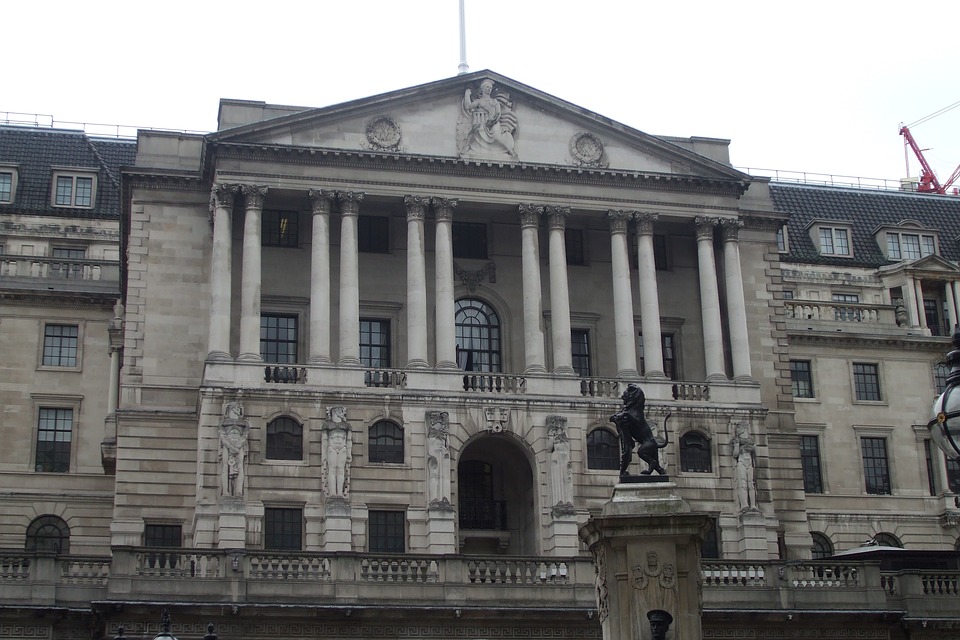
Bank of England sets out plans to wean UK economy off stimulus

The Bank of England said on Thursday it could see a modest reduction ahead in the huge support it has provided to Britain’s economy during the COVID-19 pandemic and set out how it could gradually tighten monetary policy.

For now, the central bank decided to keep its stimulus at full speed, even though it expects inflation to jump to 4.0% around the end of the year.

Only one of the BoE’s eight monetary policy-makers, Michael Saunders, voted to reduce the size of its bond-buying programme which remains unchanged at 895 billion pounds ($1.25 trillion).

The vote to hold its benchmark interest rate at a historic low of 0.1% was unanimous, as expected.

With more than 70% of adults in Britain now fully vaccinated against COVID-19 and most social-distancing rules lifted, Britain’s economy has recouped much of its 10% crash of 2020.

This has prompted the BoE, like other central banks around the world, to spell out how it eventually plans to rein in its stimulus.

The BoE’s rate-setting committee said “some modest tightening” of monetary policy over its three-year forecast period was likely to be necessary .

It said it would start reducing its stock of bonds when its policy rate reaches 0.5% by not reinvesting the proceeds of maturing debt, as long as that made sense for the economy.

Markets have priced in BoE rates reaching that level only in late 2023 or early 2024, after a first rate rise to 0.25% around August next year.

The BoE also said it would consider actively selling down gilt holdings when the rate reaches at least 1%.

Previous guidance, from June 2018, said the BoE would not start to unwind bond purchases until Bank Rate was near 1.5%.

Governor Andrew Bailey said much had changed in the past three years and “if we stuck with 1.5%, when you look at the market curve, that would be tantamount to saying that we would actually never reduce the … balance sheet as things stand today.”

To find out more about how we can assist you with your Second Charge Mortgage please click here

GRADUAL TAPER

The scale of the BoE’s asset purchases came under fire from lawmakers in Britain’s upper house of parliament last month, who suggested the bank was “addicted” to buying bonds. read more

Bailey called this a “very poor choice of language” as it had a “very damaging meaning for people who are suffering”, and denied the BoE was trying to reduce government borrowing costs.

Sterling was little changed after the announcement. British government bond prices were slightly lower.

“The Bank has given its fair share of false signals on this in the past, but the broad messaging is consistent with a number of other global central banks that are preparing markets for the very gradual tapering of monetary support,” Luke Bartholomew, an economist at Aberdeen Standard Investments, said.

The Federal Reserve’s top policymakers are also showing signs of a split about how quickly the U.S. central bank might need to scale back its quantitative easing plan. read more

TEMPORARY INFLATION

Bailey said unemployment was no longer expected to rise when finance minister Rishi Sunak’s job-protecting furlough scheme is phased out at the end of September. The key challenge for the economy was now whether firms could fill vacancies. read more

A big jump in wages could add to British inflation which hit 2.5% in June and which the BoE said was now on course to rise even further above its 2% target in the months ahead, touching 4.0% in late 2021 and early 2022, its highest in 10 years.

In May, it had forecast a peak of 2.5%.

But the BoE said it still thought the jump in inflation would prove to be temporary.

It forecast that inflation in two years’ time would be just above its 2% target. Deputy Governor Ben Broadbent said the forecast should not be read as a policy signal, and noted that inflation was below target in three years’ time.

The BoE said it expected Britain’s economy would grow by 7.25% in 2021, unchanged from its May forecast, one of the fastest expansion rates among big, rich economies. It edged up its estimate for growth in 2022 to 6%.

The MPC is due to return to its full strength of nine members once it appoints a new chief economist.

Source: Reuters

Discover our Second Charge Mortgage Broker services.

Marketing No Comments

Bank set to hold interest rates, but policymakers split on inflation threat

Speculation is mounting that the Bank may halt its £895 billion bond-buying programme as the economic recovery spurs on inflation.

The Bank of England will give its latest verdict on interest rates and the economy on Thursday amid a growing split among policymakers over the threat of soaring inflation as growth rebounds.

Members of the Bank’s Monetary Policy Committee (MPC) appear increasingly at odds over the need to swiftly remove some of its economy-boosting measures and whether surging inflation is temporary.

While interest rates are set to remain on hold at 0.1%, there is mounting speculation the Bank may halt its £895 billion quantitative easing bond-buying programme as the UK’s economic recovery spurs on sharp rises in the cost of living

The decision comes after two rate-setters – deputy Bank governor Dave Ramsden and MPC external member Michael Saunders – said swift action may soon be needed to cool inflation.

This suggested there may be growing support on the MPC for QE to be curtailed, after the Bank’s former chief economist Andy Haldane had repeatedly been the lone voice calling for a £50 billion QE cut before he left the committee last month.

But others on the MPC – including deputy Bank governor Ben Broadbent – remain of the view that inflation will still ease back after the year-end.

Policymaker Jonathan Haskel and incoming MPC member Catherine Mann have also signalled now is not the right time to cut support for the economy, with rising cases and concerns over the new Covid-19 Delta variant increasing uncertainty.

To find out more about how we can assist you with your Second Charge Mortgage please click here

Allan Monks, an economist at JP Morgan, said: “While there is a risk the Bank votes to suspend its remaining asset purchases, we expect downside risks from the latest Covid wave will persuade it to err on the side of caution and see out the current program.”

He said the Bank was more likely to instead give forward guidance on its plans for winding down QE to calm inflation fears.

Either way, the Bank will be looked to for assurances it can keep above-target inflation in check after recent figures showed it jumped to its highest for almost three years in June, at 2.5%.

The Bank is expected to hike the inflation outlook in its quarterly set of economic forecasts, to 3.6% in the fourth quarter from 2.5% previously, according to Mr Monks.

He believes lower-than-expected gross domestic product figures for May – when the economy grew by 0.8% – will see the Bank nudge down its 2021 growth outlook to 7.1% from 7.3 previously, but edge it up in 2022 to 5.9%.

The peak unemployment forecast is also set to be trimmed to 5.2%, but there will be little sign of an imminent rate hike, he added.

“We look for the Bank to project inflation falling back to 2% at the two to three year horizon… this would likely see the Bank endorsing a hike during the second half of 2022, broadly consistent with our forecast for a fourth quarter 2022 rate rise,” said Mr Monks.

Source: Shropshire Star

Discover our Second Charge Mortgage Broker services.

Marketing No Comments

Fears many thousands could lose jobs as furlough scheme changes

Fears have been growing many thousands of people could be made redundant as the furlough scheme gradually phases out.

From Sunday, employers will have to contribute 20 per cent towards the wages of furloughed staff which rises from 10 per cent.

However, a survey suggests one in five companies still using the furlough scheme are planning to let staff go as a result.

The Treasury is also preparing to fully end the scheme by October.

The British Chamber of Commerce (BCC) polled 250 businesses with employees still on furlough.

Of those, 18 per cent said they were now more inclined to make staff redundant while 25 per cent would decrease working hours or move staff to part-time patterns.

Despite these concerns, almost 40 per cent said the change would have no impact on the business.

Official data shows 1.9 million people were still furloughed by the end of June, a decrease from 2.4 million a month earlier.

To find out more about how we can assist you with your Second Charge Mortgage please click here

Jane Gratton from the British Chamber of Commerce (BCC) said: “Today’s changes to the furlough scheme will likely result in many thousands of people being released back into the labour market, as employers who are still struggling to recover from the recession are forced to make redundancies and cuts to working hours.

“With widespread skills shortages across the economy, some will find new jobs where their skills are in demand, while others will need to retrain for opportunities in a different sector.

“Whether furloughed workers are returning to the workplace or the wider labour market, it is crucial that employers and the government give them the support and training they need to be re-engaged and productive.”

It comes after Rishi Sunak was told to apologise for “prematurely” withdrawing the furlough scheme.

Ahead of Mr Sunak’s visit to Edinburgh Glasgow and Fife this week, SNP’s shadow chancellor Alison Thewliss urged him to explain “why he is short-changing us on youth jobs” and going ahead with Universal Credit cuts that will “plunge half a million people into poverty”.

Ms Thewliss called on Mr Sunak “to apologise to the people and businesses here for withdrawing furlough support prematurely and risking thousands of unnecessary redundancies”.

She went on: “I would urge Rishi Sunak to explain to the people of Scotland why he is short-changing us on youth jobs, and ploughing ahead with Universal Credit cuts that will undermine the Scottish Child Payment and plunge half a million people into poverty, when at the same time he can find £250 million for a UK Government yacht.

“It is increasingly clear that the only way to keep Scotland safe from Tory austerity is to become an independent country with the full powers needed to protect jobs and secure a strong, fair and progressive recovery.”

By Leah Sinclair

Source: Standard

Discover our Second Charge Mortgage Broker services.
Marketing No Comments

IMF predicts UK economy to grow fastest of all G7 nations

The UK economy is set to recover much faster than expected from the Covid crisis as a resurgence in consumer spending and the success of the vaccine rollout boosted official forecasts.

According to the International Monetary Fund’s latest World Economic Outlook report, the UK economy will expand seven per cent this year, a sharp increase from the 5.3 per cent predicted in the Fund’s previous report in April.

The seven per cent expansion is the joint highest rate of all advanced economies, tied with the US. However, the American economy suffered a 3.5 per cent contraction last year, meaning if the US reaches the IMF’s forecast, its economy will have recovered from the Covid hit.

Of all the group of G7 seven nations, the UK suffered the harshest hit from the Covid crisis, with economic output plummeting 9.8 per cent in 2020.

The IMF also expects growth next year to be slower than first thought, down 0.3 per cent to 4.8 per cent – still the second fastest among G7 nations.

The reopening of the services sector of the economy – which the UK relies heavily on – after the successful relatively earlier rollout of Covid vaccines compared to its peers has triggered a resurgence in economic activity in the UK, prompting the IMF to raise its forecasts.

Responding to the report, chancellor Rishi Sunak said: “There are positive signs that our economy is rebounding faster than initially expected, with the IMF forecasting the UK to have the joint highest growth rate in 2021 among the G7 economies.”

To find out more about how we can assist you with your Second Charge Mortgage please click here

“That said, we still face challenges ahead as a result of the impact of the pandemic, which is why we remain focused on protecting and creating as many jobs as possible through our Plan for Jobs.”

The enormous stimulus programmes launched by advanced economies to protect households’ income, jobs and prevent business bankruptcies is likely to push their combined debt-to-GDP ratio to 122.5 per cent by the end of this year.

The IMF expects Japan to have the slowest rate of output expansion of all advanced economies in 2021, rising 2.8 per cent, reflecting relatively longer lockdown periods in the country.

Europe’s largest economy, Germany, is forecast to have the second worst rate of growth at 3.6 per cent. Italy is third with a 4.9 per cent expansion.

China is expected to gain a greater share of the global economy.

Access to vaccines determines economic trajectory, warns IMF
The economic trajectory of each country has become more determined by their access to Covid vaccines, the IMF warned in the report.

Advanced economies have largely rolled out vaccines at a rapid rate, while a large proportion of emerging market and developing economies have struggled to secure enough vaccine supply to distribute among their populations.

These disparities in vaccine allocation has resulted in the global economic recovery “split[ting] into two blocs: those that can look forward to further normalisation of activity later this year (almost all advanced economies) and those that will still face resurgent infections and rising Covid death tolls” the IMF said.

Gita Gopinath, the IMF’s chief economist, said: “growth prospects for advanced economies this year have improved by 0.5 percentage points, but this is offset exactly by a downward revision for emerging market and developing economies driven by a significant downgrade for emerging Asia.”

The Fund called on countries that had procured excess doses – mostly rich economies – to donate vaccines to nations with low supply levels.

IMF urges central banks to keep monetary policy loose
The Fund urged central banks to maintain ultra-loose monetary policy in order to prevent a slowdown in the global economic recovery.

The Fund dismissed recent sharp price rises as purely “transitory” and said central banks should “avoid tightening until there is more clarity on underlying price dynamics.” However, it did say central banks should be “prepared to move quickly.”

“The current spikes in annual inflation in part are the result of mechanical
base effects from last year’s low commodity prices. Moreover, prices have increased
because of the likely transient supply-demand mismatches,” it said.

Latest data shows inflation in the UK is already running higher than the Bank of England’s target, up 2.5 per cent annually in June.

Criticism of central banks’ adherence to quantitative easing is intensifying, with members of a House Lords committee publishing a report last week accusing QE of widening wealth inequalities.

By Jack Barnett

Source: City AM

Discover our Second Charge Mortgage Broker services.

Marketing No Comments

UK economy growing at the fastest pace in eighty years – EY

Big Four accountancy firm, EY, has upgraded the country’s economic growth prospects, predicting the fastest rate of growth in 80 years as the UK emerges from the coronavirus pandemic.

The EY ITEM Club’s Summer Forecast predicts the UK economy to grow 7.6% this year, the fastest rate of economic growth since 1941, upgrading its forecast by 0.8 percentage points from Spring figures.

The UK economy is expected to now return to pre-pandemic level by the end of the year, three years earlier than appeared likely in forecasts made this time last year. Growth of 6.5% is now expected in 2022, an improvement from the 5% growth forecast in April. This will be followed by growth of 2.1% in 2023 and 1.6% in 2024.

The return to growth, according to EY, is being driven by consumer spending as the economy reopens, with confidence boosted by the UK’s rapid rollout of the Covid-19 vaccine. Delays to the government’s reopening of the economy were not judged to have impacted recovery, however.

To find out more about how we can assist you with your Second Charge Mortgage please click here

Compared to other economies, the UK is much more dependent on consumer spending on services, such as recreation and leisure activities, which meant that lockdowns had a greater economic impact here than elsewhere. Reopening these face-to-face parts of the economy means the UK should have a correspondingly faster recovery.

“Vaccines have played a key role in bringing forward the reopening of the economy and have been a key factor in the upgrades of the forecast throughout this year. We are also seeing some structural effects too: the UK’s way of measuring public sector spending means this will soon switch from being a drag on output to a positive, while the restrictions on international travel mean there should be much less of a tourism deficit than usual.

Martin Beck, the senior economic advisor to the EY ITEM Club

“While elements of the forecast remain uncertain, the UK has all the ingredients for a strong economic recovery from the pandemic. There is the possibility of a virtuous circle of positive expectations among businesses about rising consumer confidence and spending which, in turn, could boost firms’ confidence and output further. The fuel to sustain this circle – in the form of strong household and corporate balance sheets, and supportive fiscal and monetary policies – is there too.

“After almost 18 months of significant disruption, businesses have some space to plan ahead and invest in confidence. This could help businesses catch-up on the growth they’ve missed out on if they take the right steps to adjust to a return to a more familiar business environment.”

Stephen Church, EY’s North Markets Leader

The accountancy firm is also optimistic for employment figures, with unemployment predicted to peak at 5.1% in the second half of this year, according to EY’s analysis, and then beginning to fall in 2022. While above pre-pandemic levels, the rise in unemployment has been well below predictions made in 2020 at the height of the pandemic. The firm’s forecast attributes the furlough scheme and the way businesses have adapted to new trading conditions to the better than expected picture for jobs.

While EY’s forecast is optimistic for rapid growth as the consumer economy reopens in the UK, uncertainty remains over inflation and to what extent the British public will draw on savings built up during lockdown. Inflation is forecast to reach 3.5% by the end of 2021.

Martin Beck added:

While consumers have accumulated their largest stockpile of savings since the Second World War, the big question is whether they will actually start to spend these funds once restrictions on activity are lifted. The assumption is that they will, but this is not guaranteed. The picture for consumers is not entirely positive: savings are concentrated among higher-income households, while higher unemployment and inflation will weigh on real income growth. Household incomes are expected to rise 1% in real terms this year, which is well short of forecast GDP growth.

“The risks posed to the forecast by inflation can’t be overlooked either, particularly if prolonged higher-than-target inflation prompts the Bank of England to tighten monetary policy. However, while the departure of overseas workers from the UK during the pandemic might lead to some inflationary bottlenecks, there are factors, such as a stronger pound, which will help keep a lid on prices. Positively, the ingredients which were often a precursor to sustained higher inflation in the past do seem to be missing.”

Source: Marketing Stockport

Discover our Second Charge Mortgage Broker services.

Marketing No Comments

UK economic recovery to continue but new COVID-19 strains a threat

UK economy will expand rapidly this quarter as additional coronavirus-related restrictions are lifted and further pent-up demand is unleashed, a Reuters poll found, but growth is at risk from new variants of COVID-19.

The country has suffered the highest death toll in Europe from the pandemic but a fast-moving vaccine rollout has allowed the government to withdraw many of the lockdown restrictions, with more set to lifted on Monday. read more

Gross domestic product will grow 2.5% this quarter, the July 12-15 poll found, a touch better than the 2.4% predicted last month. But medians showed that pace was expected to slow to 1.4% next quarter and then to 0.9% in early 2022, unchanged from last month’s forecasts.

“So far, the UK data look promising in two respects. First, vaccines seem to have significantly reduced the health risks from the virus,” said Holger Schmieding, chief economist at Berenberg.

“Second, the UK’s GDP estimate for May shows that activity has rebounded with the easing of restrictions.”

GDP expanded a monthly 0.8% in May, much faster than its typical pre-pandemic pace but down from April’s 2.0% surge, official data showed last week. read more

On an annual basis, growth was pegged at 6.7% this year – much stronger than the 6.2% predicted last month – and an unchanged 5.2% in 2022.

But when asked what was the biggest threat to those buoyant numbers over 70% of respondents said the spread of new variants of COVID-19.

To find out more about how we can assist you with your Second Charge Mortgage please click here

“COVID-19 cases are rising quickly again and are showing few signs of slowing. With infection numbers doubling every 8-9 days, daily cases above 100,000 are entirely possible in the coming weeks,” said James Smith, an economist at ING.

“Rising COVID-19 prevalence also means higher rates of contact tracing and self-isolation. These risks amplifying the current worker shortage in some of the consumer services industries, but could also see consumers reducing social contacts to mitigate the risk of having to stay at home for 10 days.”

PRICE PRESSURES

Like its peers, Britain has faced steep inflationary pressures as supply chains disrupted by the pandemic and increased demand have led to price rises.

Inflation was expected to average 2.2% this quarter and peak at 2.7% next quarter. However, that upswing is likely to be transitory and is driven by the pandemic-induced low base of last year.

So while those forecasts are well above the Bank of England’s 2% inflation target the central bank was not expected to increase borrowing costs from their record low of 0.10% until 2023.

None of the 82 economists polled expected a change when the Bank announces is next policy review on August 5.

BoE interest rate-setter Michael Saunders said on Thursday the central bank could decide to stop its current programme of government bond purchases early due to an unexpectedly sharp rise in inflation, a day after another top BoE official said the time for action might be approaching. read more

“There is a risk, however, that inflation strength will prove more persistent, which may put more pressure on the BoE to tighten policy,” said Chris Hare, senior economist at HSBC.

“There are genuine supply-demand imbalances which have become apparent during the economic reopening, which we think could persist or even build in the near term.”

By Jonathan Cable

Source: Reuters

Discover our Second Charge Mortgage Broker services.

Marketing No Comments

UK inflation hits 2.5% in June, ONS has revealed

UK inflation jumped again in June, outpacing economists’ expectations to accelerate away from the Bank of England’s target, the Office of National Statistics (ONS) revealed this morning.

The Consumer Price Index (CPI) rose to 2.5 per cent last month, its highest level since August 2018, up from 2.1 per cent in May. Analysts had forecast a rise of 2.2 per cent.

On a monthly basis, the CPI rose by 0.5 per cent in June 2021, compared with a rise of 0.1 per cent in June 2020.

Once again, the ONS said that the largest single factor pushing inflation upward was transport costs such as fuel, as well as higher prices for clothes, food and footwear.

The figures come a day after it was revealed that US inflation had rocketed to 5.4 per cent.

The Labour Party said that the rise was because firms were struggling to access critical supplies and were also handling a shortage of staff.

Shadow Chief Secretary to the Treasury Bridget Phillipson said: “The Government must do all it can do to keep materials and other supplies moving to prevent shortages, including cutting the unnecessary red tape following the EU-UK agreement, and providing much better training so that we have access to the skills we need here in the UK.

“Longer-term, Labour’s plan would mean we buy, make and sell more in the UK, protecting our access to critical supplies through better use of procurement and efforts to bring more production here.”

Last week outgoing Bank of England chief economist Andy Haldane said that inflation was on track to hit 4.0 per cent – double the Old Lady’s target.

To find out more about how we can assist you with your Second Charge Mortgage please click here

Commenting on this morning’s rise, KPMG’s chief economist Yael Selfin said inflation would likely peak at 3.0 per cent this year.

“The prospects of cooling inflationary pressures next year, as firms adjust to new levels of demand, should provide the Bank of England with room to keep interest rates unchanged for a while longer”, she said.

Jason Hollands, managing director of Bestinvest: “That prices are continuing to rise as economies bounces back from last year’s brutal contraction is little surprise, especially when there are supply bottlenecks that have built up during the lockdowns.

“Where the jury remains out though is whether the surge is a temporary effect or could lead to a more persistent problem if economies are allowed to overheat fuelled by unprecedented levels of both monetary and fiscal stimulus.”

Joseph Little, global chief strategist at HSBC Asset Management said that though inflation would likely continue to increase this year, it would be a temporary bump.

“We expect inflation pressures to continue building over the course of the year driven by base effects and the service sector’s reopening, higher energy prices and general supply-demand imbalances.

“The bulk of these transitory factors should unwind over the course of 2022, pushing inflation back towards the Bank of England’s 2 per cent target.”

By Edward Thicknesse

Source: City AM

Discover our Second Charge Mortgage Broker services.
Marketing No Comments

Covid: Planned redundancies at lowest level since 2015

Employers are planning the lowest number of job cuts for over six years, as the economy reopens after the pandemic.

Redundancy figures for June from the Insolvency Service saw 15,661 positions put at risk in Great Britain.

Last June saw nearly ten times that number, the worst on record.

The reduction in expected redundancies comes despite the imminent end of the furlough scheme which was designed to protect jobs during the pandemic.

Employers planning 20 or more redundancies have to file a form called HR1 notifying government at the start of the process.

This data gives an early indication of moves in the labour market, months before they show up in the official unemployment figures.

Proposed redundancies have been on a downward trend since September, despite two lockdowns being imposed across most of the UK during that period. June saw the lowest monthly total since February 2015.

Redundancy figures from the Office for National Statistics have shown a similar trend, a few months later.

“The data suggest that there is no spike in redundancies coming in July or August,” says Xiaowei Xu, senior research economist at the Institute for Fiscal Studies. “The labour market is in a much better position than anyone expected at the start of the pandemic, and it shows how well the furlough scheme has worked,”

The latest numbers are the lowest since the Insolvency Service tightened up reporting guidelines, according to Tony Wilson of the Institute for Employment Studies.

Before that, it was more common for firms to fail to file the necessary paperwork when planning redundancies, leading to artificially lower figures, he says.

The number of HR1 forms filed has also been falling this year, with 179 forms filed by 151 different employers.

That’s the lowest number of forms since 2014, despite the winding down of the furlough scheme, where the government has supported jobs in the pandemic by paying wages when employers cannot.

To find out more about how we can assist you with your Second Charge Mortgage please click here

No rise despite end of furlough
From July, employers will have to pay 10% of employees’ wages, on top of pension contributions and employer’s National Insurance. That rises to 20% in August, until the scheme finishes completely at the end of September.

“Anyone who has been on furlough this year has already cost their employers money – so their employers must be keen to keep them on. It’s not surprising that they are not being made redundant in large numbers,” says Ms Xu.

A total of 11.6 million jobs have been furloughed during the pandemic, though only 2.4 million were still on furlough at the end of May.

The success of the furlough scheme and the vaccine programme have lead many economists to cut their forecasts of how many jobs would be lost in the pandemic.

“By the time the furlough scheme ends on 30 September, the economy is likely to be strong enough to support a level of employment not far off where it is now. In fact, there is evidence that firms are finding it increasingly difficult to hire workers, especially in industries such as transport and manufacturing,” says Ruth Gregory, senior UK economist at Capital Economics.

“I think it’s likely that many firms have already made and communicated their plans and that with the easing of restrictions happening on schedule next week, we just won’t see any significant increase in redundancy notifications over the next few months,” says Mr Wilson.

Until recently, HR1 data were not routinely published, except for in Northern Ireland.

Last year the BBC began requesting these figures through the Freedom of Information Act, revealing the extraordinary increase in redundancy plans through the spring and summer of 2020.

This year, the Insolvency Service has started to publish these figures every month on its website.

The data only covers firms proposing 20 or more job cuts, so smaller firms are not picked up by these figures. Employers sometimes notify more redundancies than they eventually make.

The figures are not classified as Official Statistics, which are subject to rigorous quality control procedures.

Data for Northern Ireland is published by the Northern Ireland Statistics and Research Agency as part of its monthly Labour Market Report.

By Ben King

Source: BBC

Discover our Second Charge Mortgage Broker services.

Marketing No Comments

UK’s economic rebound slowed in May according to official data

UK’s economic rebound slowed sharply in May despite a relaxation of social-distancing rules, according to official data which also showed a hit to carmakers from the global shortage of microchips.

Gross domestic product expanded by a monthly 0.8%, much faster than its typical pre-pandemic pace but down from April’s 2.0% surge. It was also a lot weaker than the median forecast of 1.5% in a Reuters poll of economists.

“Of course, the pace of the recovery was always going to slow as the economy climbed back towards its pre-crisis level. But we hadn’t expected it to slow so much so soon,” Paul Dales, an economist with Capital Economics, said.

Britain suffered one of the biggest hits from the pandemic among advanced economies last year and GDP in May was 3.1% below its level in February 2020 just before the pandemic struck.

The Bank of England expects Britain’s economy to grow by 7.25% this year, the fastest since 1941. Last year output plunged by almost 10%, the biggest drop in more than 300 years.

April saw the easing of restrictions for many retailers, hairdressers, and pubs and restaurants that could serve customers outside. In May, hospitality firms were allowed to resume indoor service.

Britain’s dominant services sector grew by a weaker-than-expected 0.9% in May from April as a huge 37.1% monthly jump for accommodation and food services failed to offset slower increases elsewhere in the sector.

Supermarket sales fell as more people ate out, and education output dropped due to a decline in school attendance. Reduced COVID-19 testing also weighed on GDP.

Industrial output grew by 0.8% but manufacturing shrank narrowly. The chip shortage affecting carmakers led to the biggest fall in their output since April 2020.

Data published earlier this week showed Germany’s industrial output fell in May as semiconductor bottlenecks also contributed to a recovery slowdown in Europe’s largest economy.

To find out more about how we can assist you with your Second Charge Mortgage please click here

Bank of England Governor Andrew Bailey, taking part in discussions with his Group of 20 peers, said the world needed “robust openness to prevent the breakup of supply chains, which we are seeing threats to” in data from Britain and beyond.

“I think the G20 is in the front line here in reinforcing the importance of openness in a multilateral context,” he said.

Output in Britain’s construction industry contracted by 0.8% from April, hit by the fourth-rainiest May since 1862. Dales at Capital Economics said the fall could also reflect shortages of materials and labour.

NEW RELAXATION – REBOUND OR RISK?

Prime Minister Boris Johnson plans to lift most of the remaining restrictions from a third lockdown on July 19.

Rory MacQueen, an economist at the National Institute of Economic and Social Research, a think-tank, said the decision could yet backfire.

“It remains to be seen whether the lifting of further restrictions in July contributes to a continuation of strong growth in the third quarter or – if cases of COVID-19 continue to rise – increased caution among consumers and even another national lockdown,” he said.

Cases of the Delta variant of the coronavirus have accelerated in recent weeks but private-sector data and surveys have suggested no major hit to hiring or consumer behaviour.

The ONS revised down its figure for growth in April to 2.0% from 2.3% – reflecting a reduced contribution from COVID testing – although the estimate for March was increased.

Compared with May last year, when the country was in its first coronavirus lockdown, GDP was up by nearly 25%.

Separate data showed British imports and exports with the European Union continued to recover after a slump in January when the country finally left the bloc’s single market. But they remained below trade volumes with the rest of the world.

Reporting by William Schomberg and David Milliken

Source: Reuters

Discover our Second Charge Mortgage Broker services.

Marketing No Comments

UK economy records modest May growth despite reopenings

The latest UK growth data covering May was a tad disappointing, with economic activity increasing by 0.8% on the month, a little lower than the 1.3/1.4% figure we’d been looking for. The good, albeit unsurprising, news is that consumer services activity rebounded strongly again owing to the ongoing reopening, and the likes of hospitality and recreation indices are essentially back to where they were last summer with comparable levels of restrictions. Otherwise the picture was slightly lacklustre, with the likes of retail, construction and manufacturing all recording month-on-month falls. In the case of the latter, you’d probably put this down to some of the supply chain issues being encountered globally.

Nevertheless, we still expect the UK to record approximately 5% growth through the second quarter. But the outlook for the current third quarter is becoming trickier to predict. Covid-19 cases are rising, albeit the growth rate may finally be showing some tentatively signs of slowing. And while the link with hospitalisations has weakened with the vaccines, there is growing concern about the number of people needing to self-isolate.

To find out more about how we can assist you with your Second Charge Mortgage please click here

Around 600,000 people were pinged by the NHS app or told to isolate by contact tracers in the week to 30th June, and that’s likely to be in the millions within days, if it isn’t already. This risks amplifying the worker shortages that we’re seeing in the consumer services sectors right now.

There’s also a growing risk that consumers begin to ‘act with their feet’ and reduce socialisation again while cases are high. And this may be one contributing factor to the recent levelling off in UK high frequency data. Mobility and spending data have come off recent highs.

We’d still expect positive third quarter growth of around 1.5%, especially given we’re not currently looking at new restrictions – and indeed the government is planning a further relaxation on 19 July. And we’d still say the outlook beyond the summer looks reasonably good, assuming no significantly vaccine-evasive variants emerge in the near-term.

We expect the size of the economy to be more-or-less back to pre-virus levels by the end of the year.

Source: Think Ing

Discover our Second Charge Mortgage Broker services.